
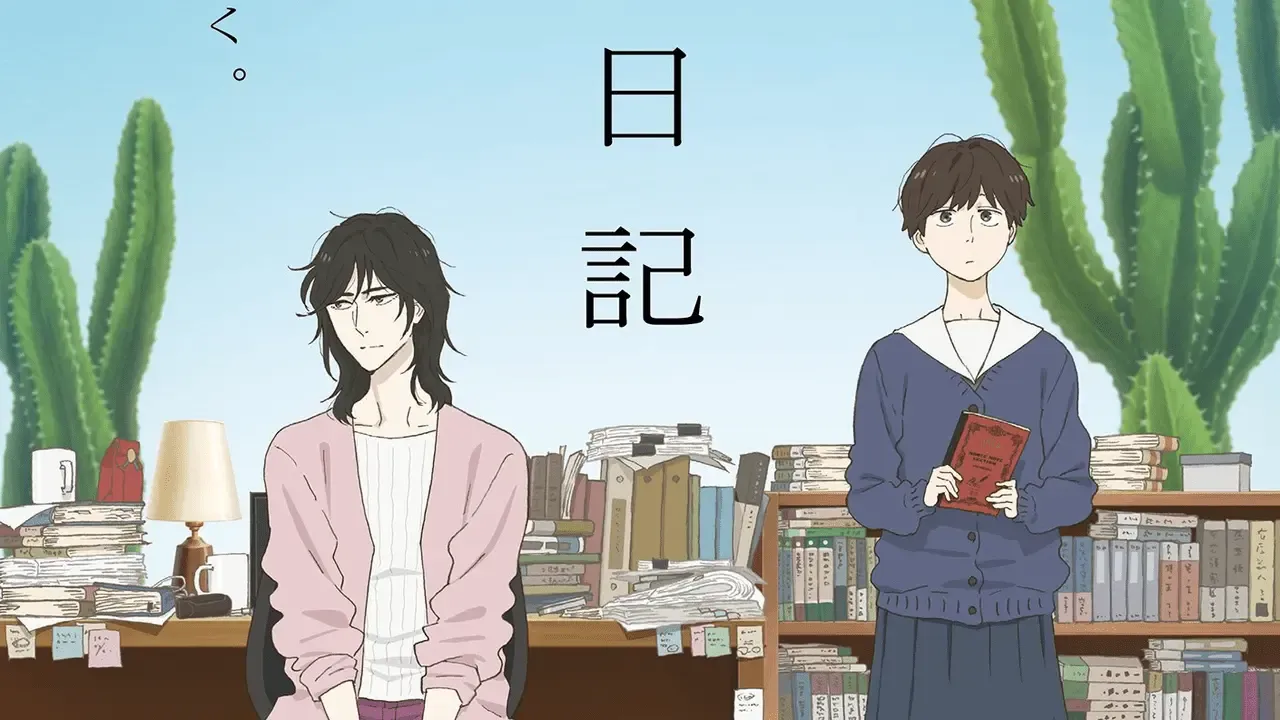
The Japanese Broadcast Critics Association revealed that the series won one of the four awards for this month.
The new Josei anime “Journal with Witch” (Ikoku Nikki), based on Tomoko Yamashita’s manga, aired from January to March 2026. The Japanese Broadcast Critics Association announced on Monday, 20 April, that the series has won its prestigious Galaxy Award for March. Journal with Witch won one of the four Galaxy Awards for March 2026.
Journal with Witch
Studio: Shuka
Streaming platform: Crunchyroll
Why did Journal with Witch win the Galaxy Award?
The Japanese Broadcast Critics Association started the Galaxy Awards back in 1963 to recognize the exceptional programmes, groups, and individuals that have contributed to the improvement of Japanese broadcasting culture. As per the report by Mantan Web, the association has made a comment on why Journal with Witch won this prestigious monthly award. It states (machine translated):
“The story of Asa, a 15-year-old girl who suddenly loses her parents, and her aunt, the novelist Makio. It’s a story of two people with completely opposite personalities and values. They live together in the same room, but it feels like they are living in different lands. The anime delicately portrays their cohabitation through its unique depiction of inner landscapes and sound effects. The quiet affirmation of mutual respect and coexistence despite their inability to understand each other deeply resonated with me.”
Since it won the monthly award, Journal with Witch is now also nominated for the association’s yearly Galaxy Award, which will be held in June 2026.
What is Journal with Witch about?
The Journal with Witch anime premiered on 4 January, 2026 globally on Crunchyroll and ran for a total of 13 episodes. It’s based on Tomoko Yamashita’s manga which ran in Shodensha’s Feel Young magazine from 2017 to 2023. The official website of the anime describes the story as:
Makio Kodai, a shy novelist, impulsively takes in her niece, Asa Takumi, who lost both her parents. Makio's previously quiet daily life is turned upside down by the unexpected start of living together. Unaccustomed to living with others, she feels uneasy about living with 15-year-old Asa. Meanwhile, Asa, who has lost both her parents and nowhere to belong, feels alone for the first time and comes into contact with Makio's “unadult” way of life, completely different from her mother's.
Makio is not good at socializing and prefers solitude, while Asa is friendly and straightforward. The two have completely different personalities and values, but they begin an awkward life together. A story of two people living together in solitude, despite their age difference, and how they begin to fumble their way through the process.