
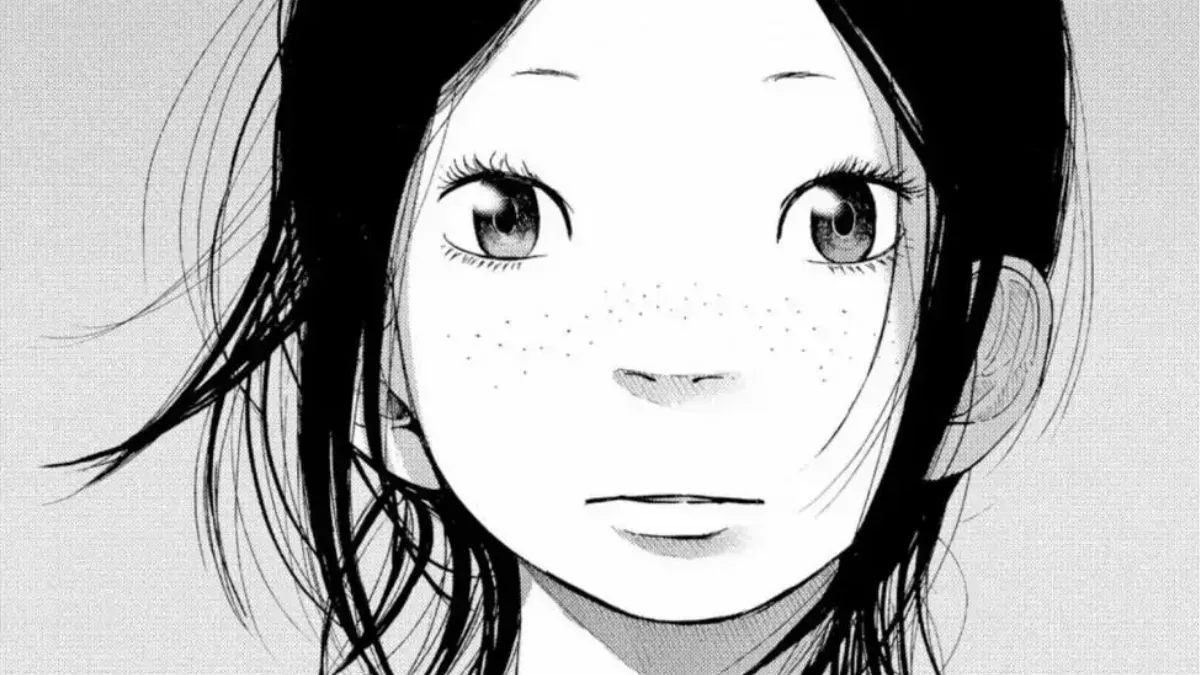
Inio Asano's "Solanin" is a bittersweet and painful introduction to the realities of adulthood.
Growing up, adulthood often feels like the finish line of the long journey that lies ahead of you. You graduate university, find a stable job, earn enough money to live comfortably, and eventually build a life of your own. It is easy to imagine that once you reach that point, everything will finally fall into place. But the thing is, we don't allow ourselves to truly break free from our childhood fantasies. We realise too late, when we finally reach the threshold of adulthood, that it isn't everything it was cracked up to be.
So, what does it mean to be an adult? What's waiting out there for us? Inio Asano's “Solanin” tries to give us an answer.
… Well, honestly, it's more of a question.
Warning: light spoilers ahead
Solanin
Writer and illustrator: Inio Asano
Publisher: Shogakukan
What is Solanin about?
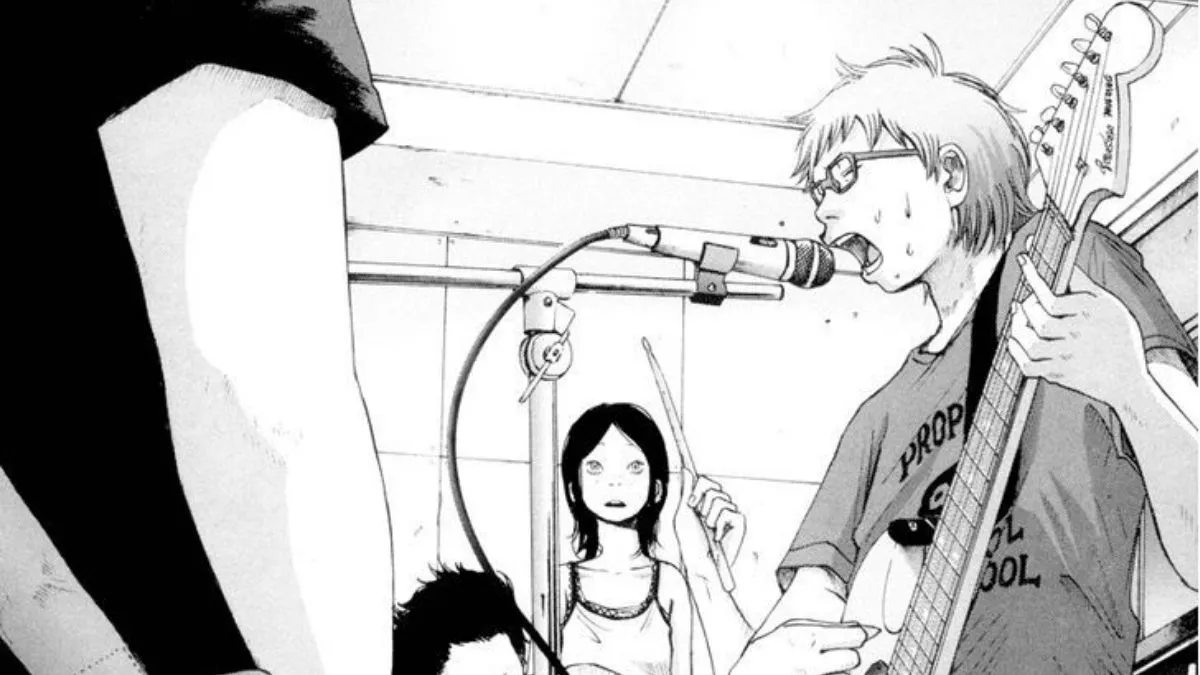
Solanin follows 20-something Meiko two years after her university graduation, when she's stuck in a dead-end job she absolutely hates. She lives together with her long-term boyfriend Taneda in an old apartment, and it's clear that neither of them have a real direction in life.
Taneda is stuck in limbo, working part-time jobs while flitting between wanting to get his university band off the ground and nursing his insecurities. Meiko is deeply dissatisfied with the banalities of adulthood. In the end, the two make major decisions that they believe will finally get them to where they want to be: Meiko finally quits her job, while Taneda decides to finally devote his time to making a proper debut song for his band.
These decisions leave a lot of uncertainty in their wake, but the couple find themselves wary yet hopeful for the direction of their future together. However, an unexpected tragedy changes their lives forever.
What does it mean to be an adult?
Although Inio Asano's trademark absurdist comedy is evident throughout the story of Solanin, the existential question of “What does being an adult mean?” doesn't soften. Each character in the manga is a young adult grappling with the crippling fear of getting their lives together, but it's clear that they don't know what exactly to do with themselves.
Frankly, this dread isn't really anything new. Every single adult human on this planet probably still asks this question to themselves from time to time. But Asano's story doesn't try to wax philosophical for the sake of being philosophical, nor does it weigh you down with the painful edge that Solanin has in store. Instead, Asano allows you to simply reside in uncertainty alongside the characters.
And for Asano, uncertainty is not a problem: it's a factor of hope.
“I know that there is no right answer,” Taneda thinks to himself in one of the chapters, “the only thing I'm certain about is that time flows like a river… and rivers always flow out to sea.”
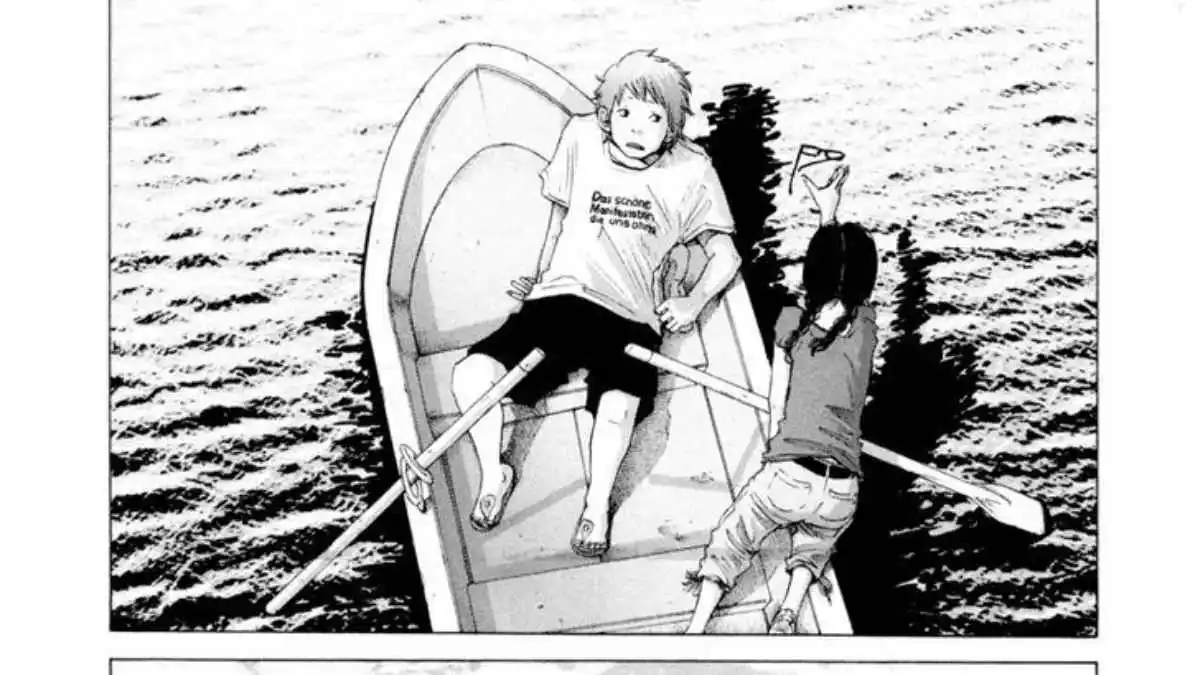
The metaphor is quite simple, but it perfectly encapsulates what Solanin (and Asano) understands about growing up. A river doesn't know where it's going in the same way we don't know where our lives are headed. The water flows as it always does, and no matter what happens, it will always find its way to the open sea.
But the uncertainty of what happens in the middle of that journey is exactly what makes it terrifying to begin with. Taneda ponders about trying to go against the flow of the water, and in turn refusing the predetermined motions of adulthood as he knows it. To graduate, find a job, settle down, and continue moving forward simply because that is what everyone else seems to be doing. But going against the current comes with its own uncertainty. There is no guarantee that swimming in the opposite direction will take you anywhere better; it only guarantees that you have chosen your own direction.
Meiko quitting her job and Taneda trying to pursue his dreams of music; these decisions are their attempts to wrestle back control of their lives. Society would (and did) frown upon their choices, sure, but would it even matter if they're not willing to let society dictate what adulthood should look like for them?
Asano points out something important that we tend to forget once we grow up: you'll think that you have no second chances, and sometimes you really don't. But even then, you have everything to lose when you don't even try.
What happens when you swim upstream?
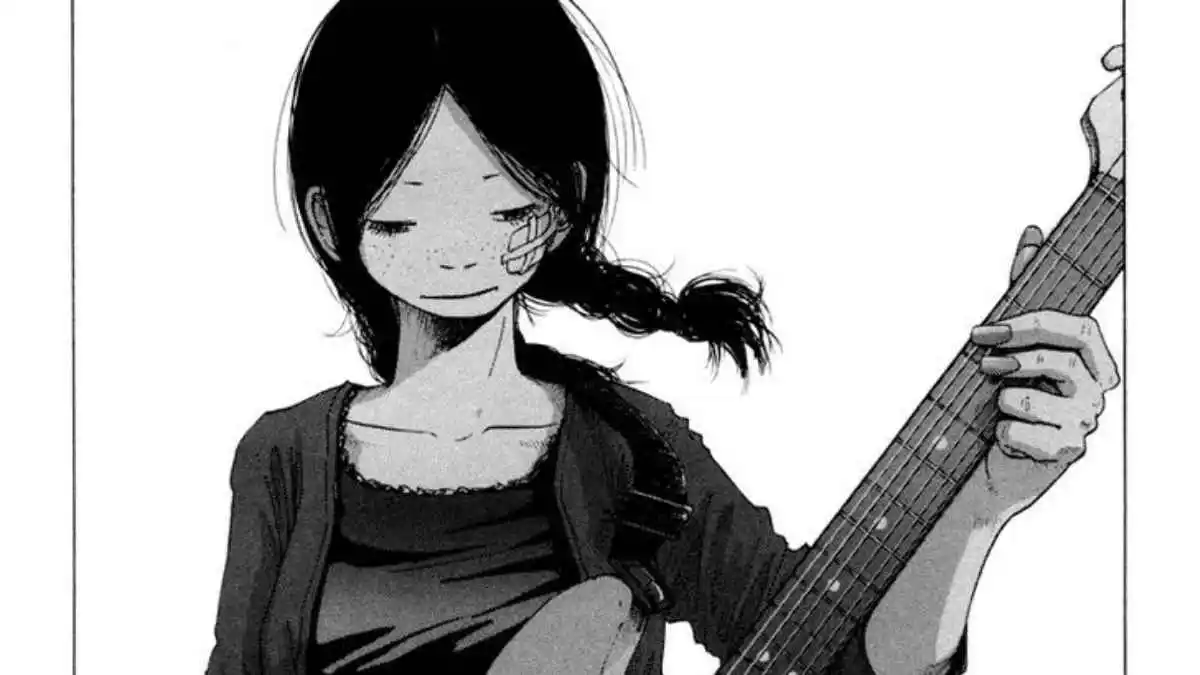
Solanin doesn't pretend that taking control means everything will suddenly work out. The latter half of the manga paints, in painful detail, that sometimes, no matter how hard you try to go against the water, the flow will cut itself off from you, and stream into someone else's current instead.
And for Meiko, the current she finds herself in is one she never asked for. As she struggles to navigate it nevertheless, she begins to pick up the pieces of a life that was never supposed to be hers to carry. What starts as an attempt to hold onto someone else's dream slowly becomes her own search for purpose.
When everything that you took for granted was suddenly wrenched away from you, what would you do?
“There's a demon in Tokyo,” Meiko opens Solanin with this sentence. As the story progresses, that demon feels like less of an external force, and more like the self-doubt and fear that holds Meiko back from taking a step forward.
For much of the story, Meiko is afraid of what comes next. She knows she isn't happy with the life she's living, but leaving it behind means stepping into a future she cannot predict. Even when she finally takes that first step, she has no guarantee that it will lead her somewhere better.
And perhaps that's the point. Meiko doesn't overcome her fear by suddenly finding all the answers. She moves forward because, eventually, she understands that not knowing what comes next is not a reason to remain where she is. The current may carry her somewhere she never expected, but staying still will not stop the river from moving.
So, when she does take that step, when she does confront herself, and when she finally understands the meaning behind what happened to her and upended everything she knew, you realise something: the journey to the sea doesn't need a reason in the beginning. You can always discover what it means for you as you keep trying.
Perhaps that is why the word “goodbye” feels so important to Solanin. In 2010, the manga received a live-action adaptation, and that same year, Asian Kung-Fu Generation released a single titled “Solanin,” with lyrics written by Asano himself. I find that the song's lyrics, written from Taneda's point-of-view, encapsulate the manga's meaning quite well, particularly in this stanza:
Goodbye, that's enough
You can cope anywhere
Goodbye, I'll manage somehow without you
Goodbye, that's what I'll do
There is something quietly painful about these words. Goodbye isn't necessarily a declaration that everything is going to be okay. It is simply the acknowledgement that something has ended, and that life has to continue regardless.
And maybe that is what swimming upstream ultimately means. You don't always get to choose where the river takes you, and you don't always get to keep the people who were swimming alongside you. But you can still choose to keep moving. Maybe that's what it means to be an adult: not knowing where the river will take you, but choosing to keep on swimming anyway.
The question Solanin gives you is: will you try?
Why you should read Solanin
Solanin is for anyone who has ever felt like they're falling behind in life. It is a story about growing up, but not in the tidy, coming-of-age way we're used to seeing. Instead, Inio Asano captures the messy middle ground between youth and adulthood: the dead-end jobs, the abandoned dreams, the relationships that change, and the terrifying realisation that nobody actually has life figured out.
What makes Solanin special is that it doesn't offer easy answers. It's funny, it's painful, and sometimes it's downright depressing, but there's a strange comfort in seeing characters who don't have everything figured out. Maybe growing up was never about having all the answers right off the bat in the first place.
If you're looking for a manga that will make you laugh, hurt, and sit with your thoughts long after you've finished reading, Solanin is absolutely worth picking up.
Who is the author of Solanin?
Inio Asano is an acclaimed Japanese manga writer and artist known for his character-driven stories, grounded realism, and explorations of the anxieties of modern life. His works often focus on ordinary people navigating complicated emotions, relationships, and the uncertainty of growing up.
Beyond Solanin, Asano's notable works include Goodnight Punpun, A Girl on the Shore, Dead Dead Demon's Dededede Destruction, Mujina Into the Deep, and many more.
The Yomiuri Shimbun has described Asano as “one of the voices of his generation,” a fitting description for an artist whose work has resonated with readers through its unflinching portrayal of youth, adulthood, and the messy realities of being human.
Where can I read Solanin?
Solanin is officially available from Viz Media in both paperback and digital formats. However, digital availability is limited to select regions, so readers outside supported territories may need to purchase the physical edition instead.