
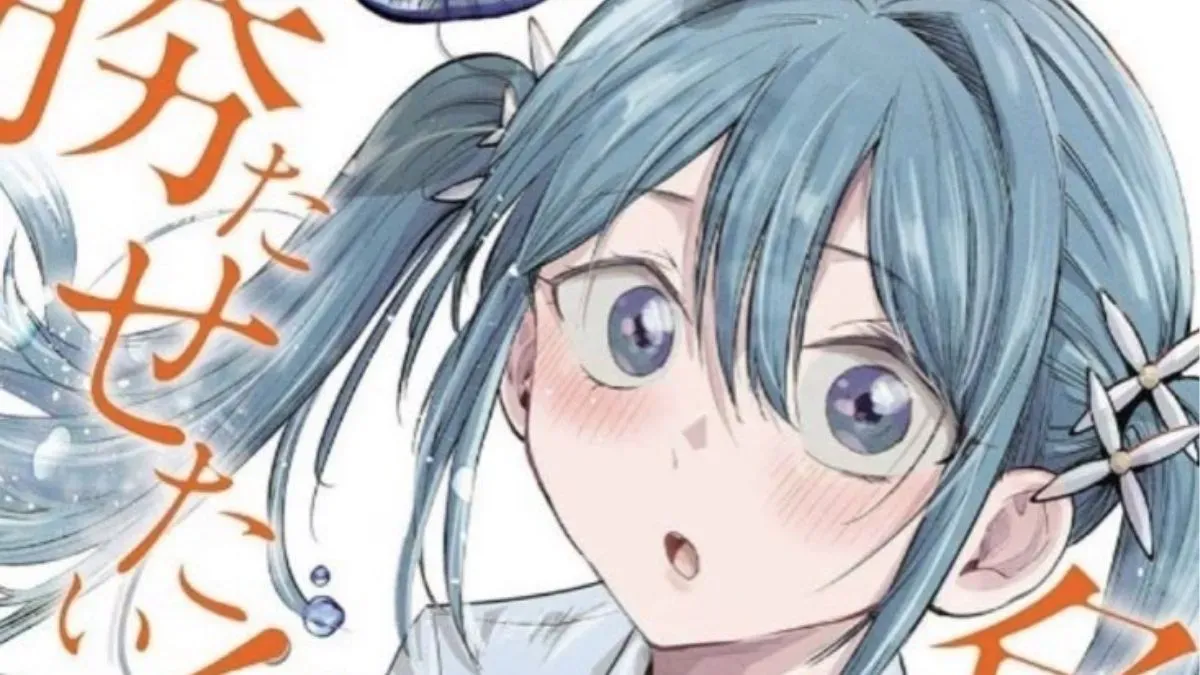
Manga author Michiru Nakayama starts a discussion that addresses overseas readership; why do foreign readers feel entitled to dictate a story they don't write?
The mangaka behind the series “I Want The Losing Heroine To Win!”, Michiru Nakayama, recently took to X (formerly Twitter) to call out overseas readership, particularly those who participate in the piracy of manga, and the harassment that an artist undergoes when it comes to comments and demands regarding their story.
Through their various statements, Nakayama addressed a pressing issue within the wider manga-reading community: piracy has affected the industry beyond devastating financial losses, as it has spawned another problematic factor–readership entitlement.
What did manga author Michiru Nakayama say about overseas fans?
Nakayama's observations stemmed as a reply to a different statement by Boys Love artist Yuiko, which, through a machine translation, reads:
“Among those who read through legitimate channels, those who read legally for free, and the trash who read on pirate sites
When you compare the reviews from these three types of readers, the differences are strikingly clear. I won't spell out exactly how they're different, but the results will be just what you all imagine.”
Nakayama quote-replied Yukio, positing that “a lot of people” who read on overseas piracy platforms “mistakenly think they're the ones steering the story.” They further on went to explain that they get a “lot of requests” to pair certain characters who are not canonically linked together, seemingly with threats involved.
Nakayama further stated that they're “thrilled to have fans overseas”, but that the loudness of their demands aren't needed when they're consuming “for free.” They close out their first statement with “I'd really appreciate it if they'd just drop some cash first.”
Nakayama would then repost a screenshot of the direct messages of the official X account for “I Want to Make The Losing Heroine Win!”, where a fan, writing in Spanish, questions Nakayama's writing direction. The messages include questions like “What the hell do you want to do to this story?” and declarations like "If the MC doesn't end up with Manaka, this work is going to be the worst piece of shit in the history of rom-coms".
"Free pirate version users and overseas bros flooding my DMs with complaints"," Nakayama stressed, “I put out warnings like ‘don’t read the pirate versions', but it's pointless. If you're gonna send a DM, at least drop some cash or send a fan letter.”
“Go For it, Nakamura!” controversy
Frankly, what Nakayama shines a light on is not a recent problem. Anyone who has been in the online space of overseas manga readership has, at some point, seen just how fans interact with the manga they consume.
Just recently, the author for the Spring 2026 anime “Go For it, Nakamura!”, Syundei, deleted her X account, after fans of the series allegedly bullied and harassed her on the platform in response to a “what if” illustration featuring characters Aiki Hirose and his teacher, So Otogiri. The harassment went to the extreme where fans allegedly demanded her to “disappear.”
Syundei had clarified the questionable relationship between Hirose and Otogiri last year. In a report by K-Comics Beat, Syundei had responded to a Brazilian fan's accusations about the manga, clarifying that Otogiri had no ill intentions. However, the situation seemingly blew out of proportion once overseas fans discovered the complexities that the Boys Love title entailed.
But it's not only Syundei that received harassment from fans.
Fan reactions to Chainsaw Man ending
Other authors like Tatsuki Fujimoto (Chainsaw Man), Gege Akutami (Jujutsu Kaisen), Aka Akasaka (Oshi no Ko), and Hajime Isayama (Attack on Titan) also received disproportionate negative reactions upon the finalisations of their series.
Tatsuki Fujimoto's ending for Chainsaw Man triggered a movement where fans repeatedly called for his death, while Gege Akutami received threats of physical harm all throughout the serialisation of Jujutsu Kaisen. Aka Akasaka received the same vitriol for Oshi no Ko, while Hajime Isayama faced blatant revisionism and rewrites to his chosen ending for Attack on Titan.
Dissatisfaction with endings, pairings, and the general direction of their stories have led to vocal fans sending harassing messages, to even more extreme death threats that more often than not drive authors to self-exile from their communities. And how do majority of these overseas opinions get traction? Through manga leaks.
So why do a segment of foreign readers feel entitled to dictate the direction of a story they neither write nor pay for? The possible factors to consider are the current trends in modern digital consumption, personal emotional investment, and publication exclusivity.
Many readers and viewers treat works of fiction and art as “customisable content” rather than an experience; they see themselves as a “consumer” who can “demand a service” to better suit a preconceived notion of how a story should go. In this sense, they are no longer appreciating a work of fiction as it is, but feel the need that their wants must be addressed and followed by a creator to satisfy their fantasies.
The consumption of works also leads to an intense personal emotional investment, particularly for certain characters. The investment, which may be considered “parasocial”, ultimately denotes to a warped sense of “ownership”. This then results to a strong desire to control a character's fate to ensure a personally satisfying outcome.
What are manga fan translations?
The lack of licensed publications also fuels the fire. It's no secret that fans outside of Japan can only do so much to read titles that don't have official English releases. And if they do, it's apparent that publication timelines differ for both languages. In this sense, fan translations, which receive the majority of the viewership of Japanese titles, treat releases like a spectacle of opinion, rather than a respect for the artform.
Opinions don't lean towards “the author has released a new update to an interesting story,” but more towards, “the new update doesn't fit the vision I have for the story.”
The way these factors connect together leads to a really basic hypothesis: readers no longer believe in a writer's vision, they take that vision and stake their ownership simply through mindless consumption.
At its core, a story is not a collaborative space between creator and audience: it is a vision shaped by the person who writes it. Readers are free to interpret, to critique, even to dislike, but not to demand ownership over something they did not create.
Nakayama’s frustration doesn’t exist in a vacuum; it reflects a growing disconnect between how stories are told and how they are consumed. And until that line is respected, the entitlement they describe will continue to echo far beyond a single timeline, DM, or comment section.