
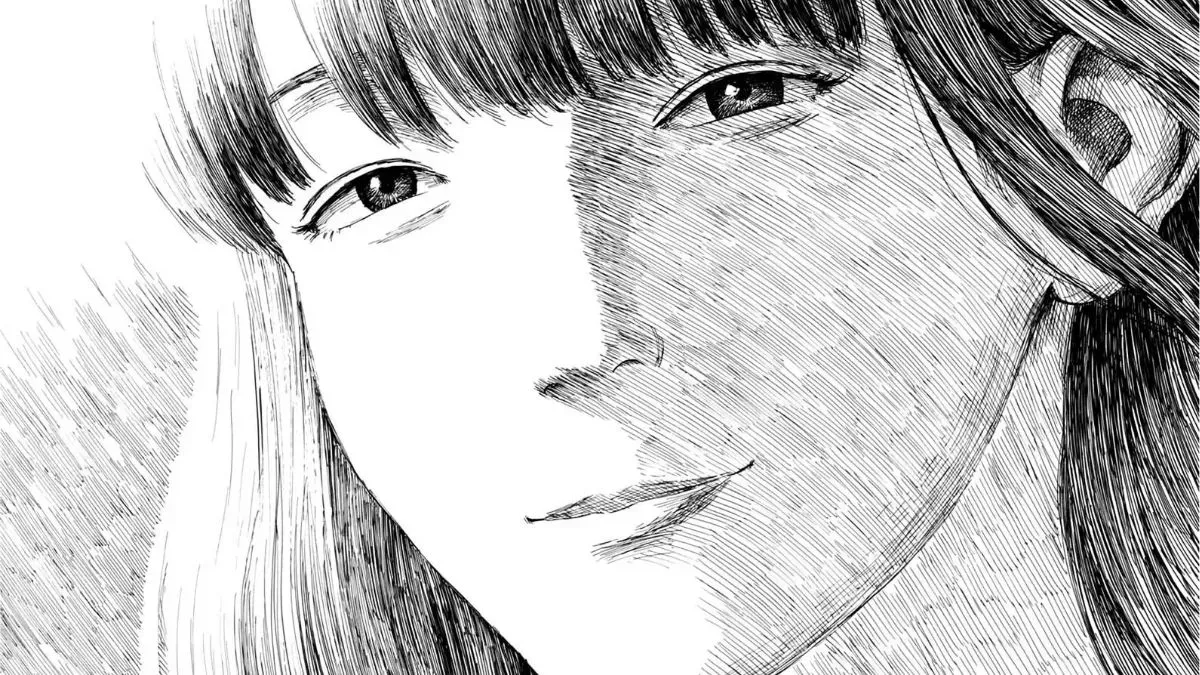
Shuzo Oshimi's "Blood on the Tracks" is a manga not for the faint of heart.
What happens when a boy suffers the consequences of his mother's unresolved trauma? Celebrated manga artist Shuzo Oshimi explored this through his polarising manga “Blood on the Tracks” (Chi no Wadachi).
“Blood on the Tracks” is not your typical, ghost-riddled, gore-filled horror manga. It's a dissection of one–if not the most–foundational relationships a child could have, and how, if it goes in the wrong direction, results in a devastating, ruinous downfall. It's a manga that doesn't hold your hand when it explores its traumatic themes. It leads you right into the meat of its psychological devastation, and it can only leave you in silence, at the end of it all.
Warning: spoilers ahead
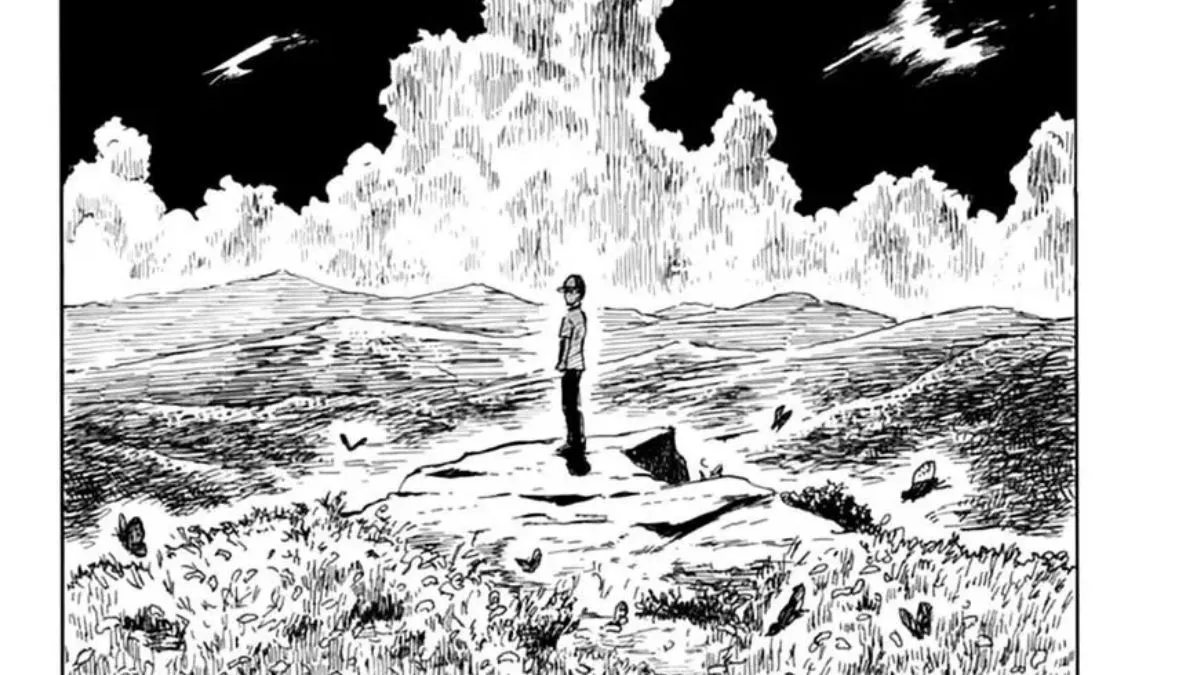
Imagine this: in the summer of your 13th year, you're on a trip to the mountains with your family. The sun is shining brightly through the foliage, painting the ground with shards of blinding light. The cicadas are singing an orchestra of noise, only drowned out by the heaviness of your breathing in your ears. You and your cousin go up to the edge of a cliff to take the view. Your parents, grandparents, and his parents are eating lunch.
Your cousin is mischievous and mean. Just a while ago, on a different ledge, he tried to jokingly push you, but your mother held on to you in the nick of time. Your aunt and grandparents laughed at your mom. You couldn't help but feel embarrassed for her. You can't seem to let that one go.
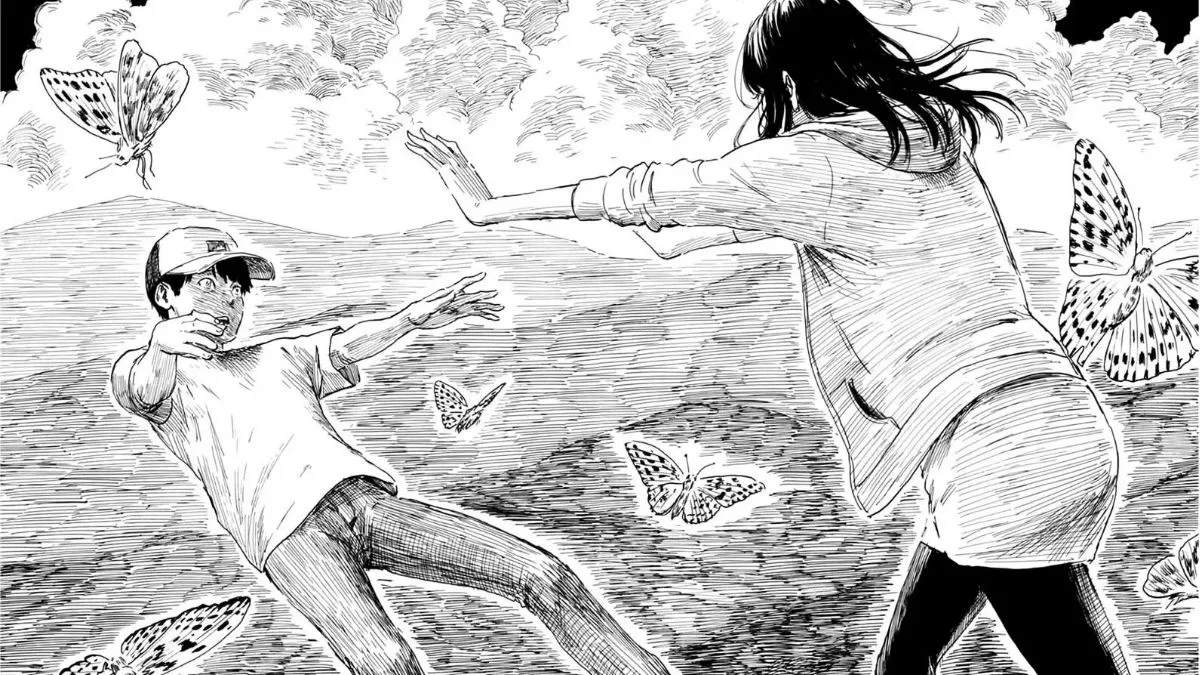
He says that he's sorry and tries to lure you over the edge. In your mind, you remember what he and your aunt said a few moments before. You refuse his invitation. He gets mad, and his anger sharpens when your mother appears behind you, looking for you both. She tells him to stay away from the cliff, but he is stubborn and refuses to back down. He starts hopping and dancing around, provoking her like children would. But then he stumbles and loses his footing. A flash of long, black hair passes through your periphery.
Your mother holds him close, as if to shield him from teetering over the edge, protecting him from certain death. He freezes at her touch. “You're so overprotective!” his words echo in your brain along with the cicadas. The world seems to still.
“Dear,” she says, “I told you, didn't I?” Silence. You take a breath.
“Auntie…?” Your cousin says in a hushed whisper, his eyes widening. You don't understand it yet, but he looks at her with unbridled fear. You see your mom's cheeks lift, as if she were smiling.
And suddenly she stands there, on the ledge, all alone. The butterflies continue to drift in the wind, unaware.
A psychological unravelling of mother and son
Oshimi's “Blood on the Tracks” is a masterclass in Freudian manipulation–a psychosexual horror that thrusts readers into the suffocating interiority of an adolescence ruined before it began.
What begins as the quiet mundanity of everyday life for its young protagonist, Seiichi Osabe slowly fractures, revealing a reality warped by maternal possessiveness and emotional enmeshment. His whole life, he only knew one thing, and that one thing was his mother, Seiko.
Seiichi is not only a child caught in a life-changing, traumatic “accident”, he is a child suspended in developmental limbo–a failure of separation, independence, and individuation. In Seiichi's mind, he is one with his mother, and cannot exist or form a higher sense of autonomy without her. Everything he does, from what bun he has for breakfast, to how he interacts with people of the opposite sex, all depends upon his mother's directive and acceptance. Seiko engulfs him. She devours him whole.
The cliff incident, which occurs at the beginning of Seiichi’s story, does more than shatter the illusion of normalcy. Seiko’s implied smile as she seemingly pushes his cousin Shigeru over the ledge seals their already suffocating bond in something darker: fear intertwined with guilt. In that moment, Seiichi becomes the sole witness to an act he cannot fully process.
The fact of their suddenly sordid, imbalanced relationship is further cemented by what immediately happens next: Seiko turns to face him, a ghost of that smile on her face, and in a blink, slumps onto the ground to scream. She tricks his senses immediately, manipulating the scene into an unfortunate accident that she had no apparent control over. She tells Seiichi to go get help, and the boy runs through the thicket of brush and trees to the concerned faces of his family.
Seiichi is immediately bombarded with an impossible question: “What happened?!”
In that moment, he had to make a choice. He had to choose between protecting his mother, or telling the truth. But what was the truth? Seiichi couldn't trust himself, or what he thought he saw. It made no sense to him that his mother would smile at Shigeru's fall, and then immediately cry out that it was an accident. He takes a moment to answer his father, sputtering through a stutter while trying to calm his breathing. He averts his gaze when he gives his answer. His cousin had fallen off the cliff.
Seiichi had chosen to lie, and that lie is based on Seiko's constructed truth. He had become an accomplice to the crime.
Seiko further elaborates the story of Shigeru's fall with her own narrative; Shigeru had been fooling around, he slipped, and she was too late to catch him. A perfect gaslight further empowered by the urgency, by the despair of Seichii's aunt and uncle.
That decision itself would later ultimately lead to what Seiichi would unfortunately have to go through in the aftermath of the event. This one incident, this sweltering summer memory, changed Seichii's life forever. And it's not for the better.
It takes a whole lot of self-control on my part to not let you know just how terrible the story gets, and just why it's a story that borders on being a masterpiece. It's the kind of horror story that stews in its realism; you can guess that in some part of the world, a child has experienced its mother's monstrous love. Oshimi's storytelling is compelling, disgusting, and heartbreaking, and if you've yet to read one of his works, then you're missing out.
Oshimi's art highlights the monster within
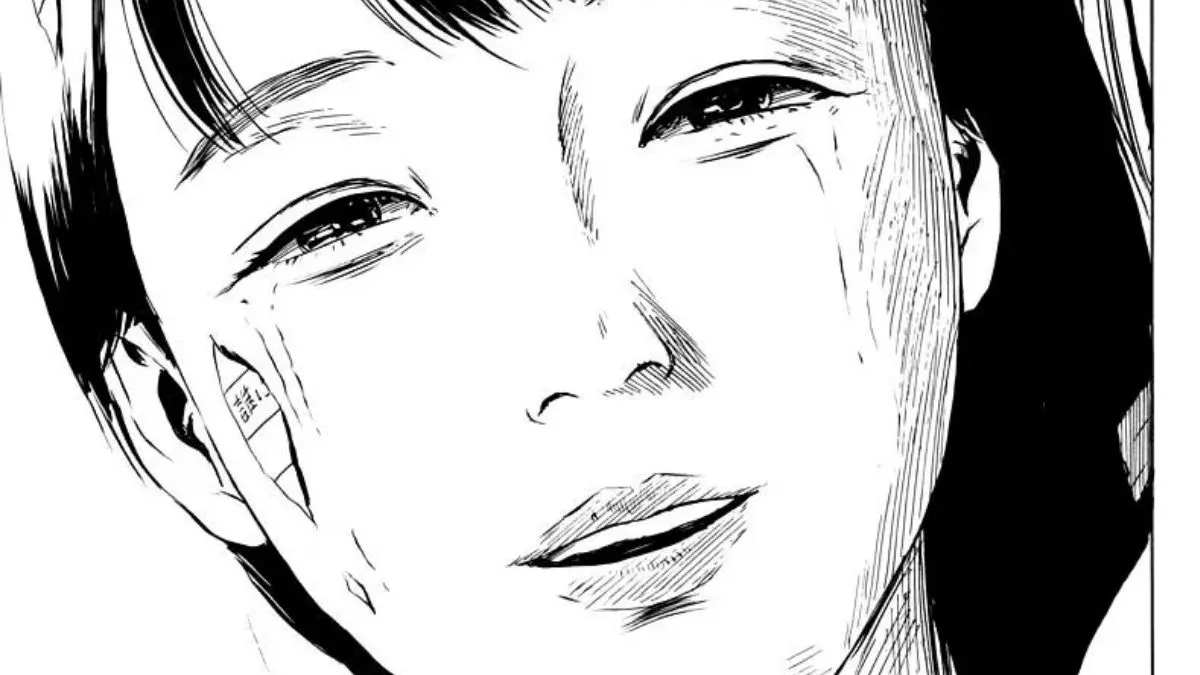
The manga doesn't hold back in making you feel unsettled and disturbed, either. As the story progresses, Oshimi supplements the tension through his art. He takes two distinct approaches when illustrating Seiichi and Seiko, and it marks a clear demarcation of their roles in the story.
Seiko is drawn in an almost otherworldly, angelic manner, mimicking how Seiichi sees her: a beautiful, young, and devoted mother who never strays from his orbit. Oshimi delicately portrays Seiko through this lens, and even through the darker, psychologically unsettling parts does not stray from this image. The panels that lead to extreme closeups of her face lends the feeling that the reader is a voyeur looking into the eyes of temptation. She tempts Seiichi to side with her through her gentleness and constructed, steady presence.
But the thing is, Seiko's angelic depiction becomes deeply unsettling once you understand how her character works. The smile on her face begins to feel cold, her eyes lose any form of feeling. As you're bombarded by closeups of her face, you, as the reader, will begin to feel the pressure of her presence… and it's uncomfortably overwhelming.
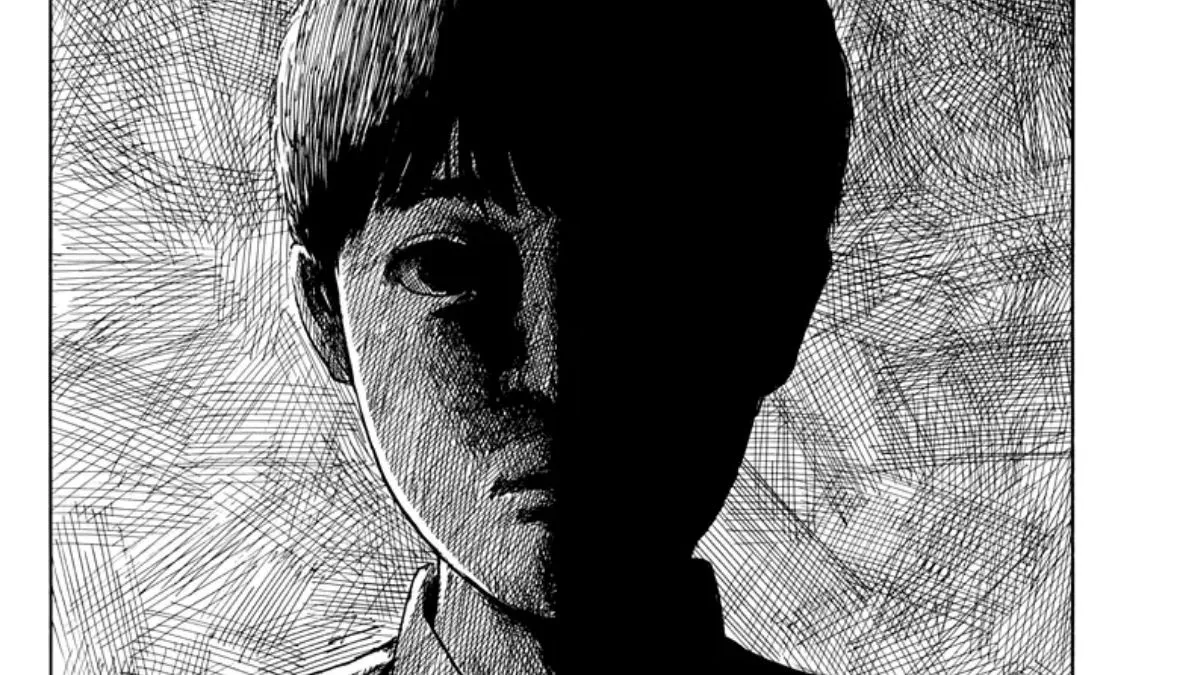
Meanwhile, Seiichi's psychological unravelling is drawn with stark physicality. As his emotional and mental turmoil deepens, Oshimi began to illustrate him in an almost shaky, unstable manner. In contrast to the measured, perfect depth of pen on paper for Seiko, Seiichi's lines are crooked, jagged, and uncontrolled. This lends the reader the idea that, through Seiko's pressure of Madonna-like perfection, Seiichi, who thought himself to know right from wrong, is desperate for her fake stability. Without her, Seiichi unravels away from the page, melting into a mess of uneven lines.
Seiichi's artistic depiction can make a reader question: what happens when the mother doesn't act like a mother? What if she is an oppressive, manipulative, and tenderly loving presence that has conditioned you to rely on her, and only on her? What if your sense of self is distorted, enmeshed in the mother's identity? How does it affect you as you navigate this? How do you survive?
“Blood on the Tracks” is a suffocating, unforgettable read; one that lingers long after its final chapter, quietly asking a question far more unsettling than any cliffside fall: if your mother shaped your world, how much of your life was ever truly your own?
“Blood on the Tracks” is available to purchase through Kodansha USA.