
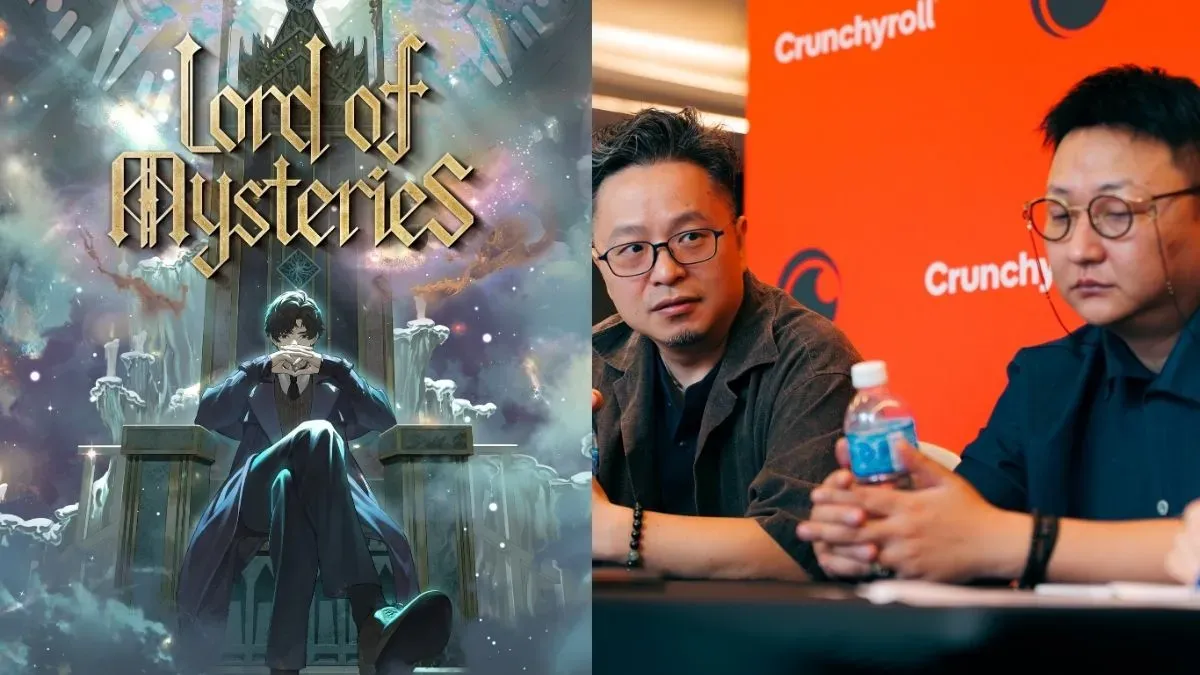
GosuAnime sat down with the key figures of the smash hit donghua “Lord of Mysteries” to talk about behind-the-scenes planning and more!
GosuAnime had the chance to sit down with the director, Ke Xiong, and scriptwriter, Liu Xing, for Summer 2025’s ultrapopular donghua “Lord of Mysteries” for an exclusive interview at Anime Festival Asia Singapore 2025.
“Lord of Mysteries” is a Chinese donghua series that adapts the expansive and fantastical novels of prolific Chinese novelist Cuttlefish That Loves Diving. The body of the novel is massive, with its first two volumes amounting to approximately 5 million words, and has gained millions of dedicated followers due to its complex and compelling story.
The donghua covers the first two volumes of the series from Chapter 1 to Chapter 213 in 13 episodes, and is produced by B.CMAY Pictures.
The story is set in a Victorian era-esque alternate world where humans can gain supernatural abilities and become “Beyonders”. The donghua boasts dark fantasy and steampunk elements, with a bit of horror in the mix.
Cruncyhroll describes the story as:
In a Victorian world of steam, dreadnoughts, and occult horrors, Zhou Mingrui awakens as Klein Moretti. He walks a razor’s edge between light and darkness, entangled with warring Churches. This is the legend of unlimited potential…and unspeakable danger.
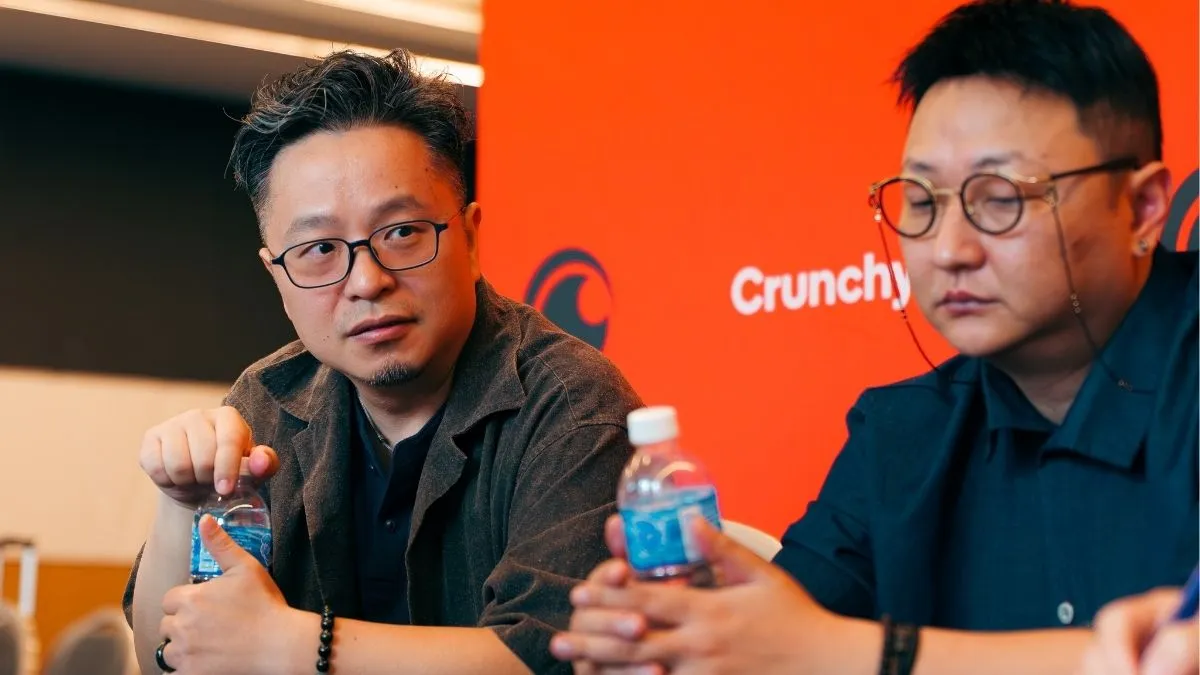
In the exclusive interview, we talked about the production behind “Lord of Mysteries”, their creative directions, and the things they’ve learned to anticipate the franchise’s ambitious 10 year plan.
Lord of Mysteries has a huge and complex world. How did you decide which parts to focus on for the first season, and what guided your choices on what to simplify or leave out?
Liu Xing: In the first season of the series, the main storyline is still based on the main character, Klein, as the only perspective. So we try to keep the plot as close as possible to the main character.
In the choices, we put in all the plot-related settings, and for the parts that are unrelated to the main story-line, we will bring them out for post production.
What was the biggest creative risk you took while adapting the novel?
Ke Xiong: We are a three-person scriptwriting team. It’s very important for us to discuss things together. And every time we discuss, because it involves the rhythm of the narrative, we have to start from the main plot of Klein.
Some of the world-building is something which is very immediate that we need to use and need to portray then and there. But if you look at the original work by Cuttlefish That Loves Diving, you can see that he has a lot of information buried within the whole novel itself. It is possible that after 100, or even 400 pages that this information point can be used.
Yet this is very useful information. The biggest challenge is, at that point in time, when the information is being surfaced, the audience may not see its relevance. But if we do not portray that, later on we cannot follow the story.
In our discussions, we often have to talk about how to do this, and how we make up for such situations. If we start from the perspective of the story, then I think that when we accept a work with such a worldview, it will be very confusing, and we will not be able to understand it. So our goal is to start from the perspective of the first season.
So what we set out to do was to build and shape the season from the beginning. So we have visual elements to portray the horror aspects, we have colour contrast to present the differences in world-building, and these all surround the character so that the audience will then see and form an impression of the world and the world beyond.
We also use props to help them understand. The hope is that the audience will follow the crime in the development bit by bit, and understand and see his (Klein’s) background, see the story, and see the world.
In the first part of the story, Klein faces a lot of indirect risks from the other characters in the story, and it is much like how we human beings face things on Earth–a lot of the pressure we face are not directed at us. In the second part, Klein becomes more proactive and sees more responsibility. That’s why we have to sort out Klein’s character–his warm, daily life, his team of professionals, and his brothers and sisters. He will gradually awaken his human nature. In the process, he faces all the warm things, and he has his own initiative after being driven by the bad guys.
This is a very important part of the story. This is how we sort out the complex world view so that it can be easily understood by the audience.
Was there a particular memorable scene that was especially hard or especially rewarding to animate and work on?
Liu Xing: The most memorable scenes from our perspective, for me, I think are the scenes when we are in sync with the audience. For these exciting scenes, the way we express it, we would also want them to be the most impressive for our audience as well.
So from the creator’s perspective, I like the episodes where there are a very rich display of emotions, or are more touching. Actually, I think that the scenes that the audience likes are the ones that we can show successfully.
Ke Xiong: For me personally, I think Episode 7 “Coincidence” is actually a very complex one. But in the end, we used the scenes, the creativity, the music, and the transition very well.
I personally think that we improved a lot more than what was in the script. I think that we could portray this through a very intricate use of frames, creative displays, music, and screen transitions.
In that episode, Klein was weak, and was mainly talking about Azik, whose story is very broad. If you only use the first volume in the series, it would be difficult to create this character. We brought up four volumes of information in the script for Azik–his life and his loneliness–because the ending of Klein’s season is also like this: he has to be alone in this world.
From the script, to the performance of the final scene, we felt that it was a very perfect ending. The author, Cuttlefish That Loves Diving, also liked it very much.
What lessons did you learn from producing Season 1 that will help with the future titles coming in for Lord of Mysteries?
Liu Xing: We received a lot of positive feedback from the first season. In Season 2, we will pay more attention to the daily life of the characters. We will show the characters to the audience as normal people–this is something that we will strengthen in the future.
Ke Xiong: When we broadcast the show, we didn’t just pay attention to the Chinese audience’s feedback, we also took into consideration the English, Spanish, and Indian audience’s feedback.
We will look for feedback on common points where we can identify and work on the story. When we tell the story, we will focus more on how we tell the story, how to deliver the message, and the rhythm of the characters. We will also focus on what the audience likes about the characters and their actions, as well as what the audience doesn’t like about these characters. Of course we will correct areas that might not be very positive.
Lord of Mysteries Season 1 is currently streaming on Crunchyroll.