
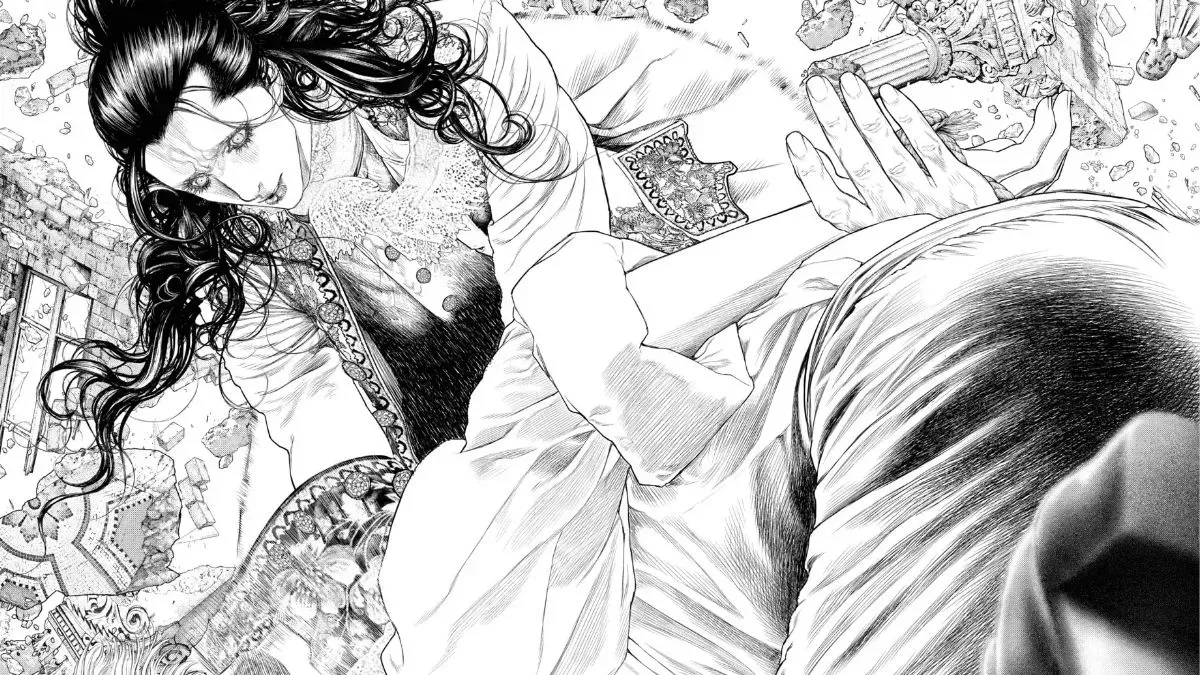
Shin'ichi Sakamoto's take on the bloody French Revolution is a masterclass in storytelling and art.
Yes, “Innocent” is a manga about the French Revolution. It's nothing new. It's been done before. We've seen shoujo legends retell the story of Marie Antoinette through rose-coloured lenses, we've seen tales that follow a more fantastical take with zombies and a crossdressing twin, but have you ever seen a tale as dark, as sordid, and as breathtakingly beautiful as Shin'ichi Sakamoto's “Innocent”?
“Innocent” doesn't romanticise the Capetian collapse, nor does it follow Marie Antoinette as a tragic victim of circumstance. It takes you closer to the background characters of French history–the ones who were hated and despised for doing the “dirty” work: the executioners.
Spoiler warning: Wait, does a historical fiction manga need a spoiler warning when it's, you know, historical?
“Innocent” sets off to ask you some hard-hitting questions: how pure are you if you're thrust into swinging the blade or commanding the guillotine to fall? How different are you from blue-blooded royalty if your life's work is a reflection of your devotion to the crown, no matter how bloody that devotion is? Sakamoto unravels the historical truths of the Sanson family, and offers us a dramatised glimpse into how generational trauma, societal pressure, and gendered discrimination can make or break a nation.
Innocent
Writer and illustrator: Shin'ichi Sakamoto
Publisher: Shueisha
What is “Innocent” about?
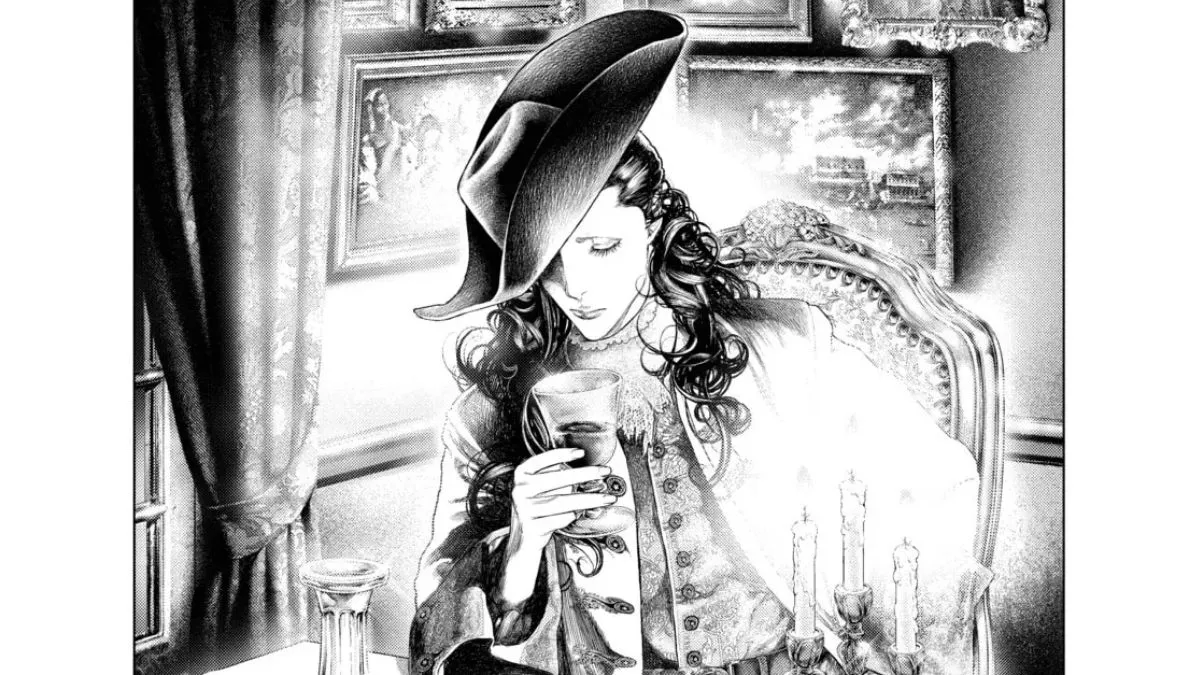
“Innocent” is based on the book “The Executioner Sanson” by Masakatsu Adachi. The story, set in 18th century France, follows the final decades of the French Monarchy. The story particularly focuses on Monsieur de Paris Charles-Henri Sanson, and his fictional sibling Marie-Joseph Sanson, as they both grapple with being part of an executioner family.
The beginning chapters of “Innocent” gives us a look into Charles-Henri's youth as heir apparent to the executioner's blade. Soft-hearted and kind-natured, Henri detests executions, and bears tremendous fear and guilt over his father's profession, much to his father's disappointment. Henri wishes nothing more than to avoid becoming like his ancestors, however, the stigma of being part of an executioner family limits him from widening his horizons.
On the other hand, Marie-Joseph is a child who seems extremely fit for the role… if only she was not born a woman. Marie is disinterested and callous, even violent to a fault. She limits her empathy for those around her, and seems more invested in grandiose ideas of shaking the restrictive norms she was brought up in.
As time passes, we see Henri try to sympathise with his role, but he more often than not loses confidence and trust in himself. While Henri sees himself taking on the role of Lord Executioner as his father's health starts to fail, Marie also attempts to find a way to continue with her family's legacy. However, her ambition stems from her desire for power and autonomy in a heavily patriarchal society.
Who is Charles-Henri in “Innocent”?
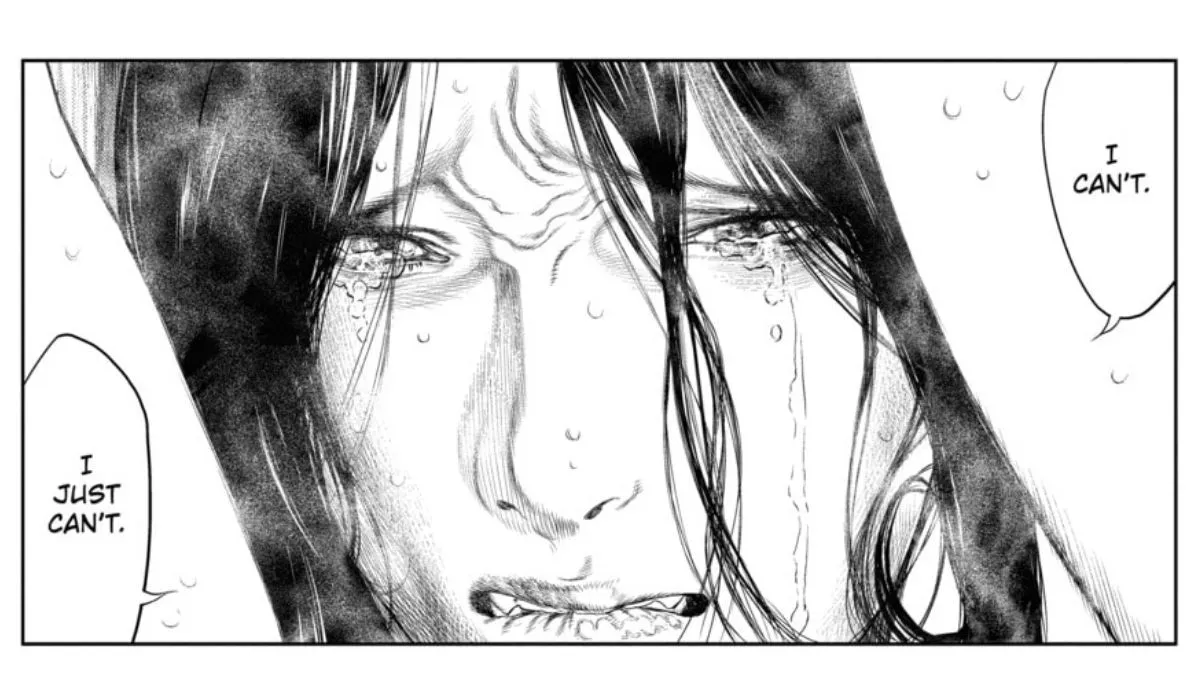
Although the family drama of the Sansons take centre stage in “Innocent”, the story itself does not expect you to simply follow a creative historical retelling. Sakamoto layers the tragic tale of the Sanson siblings with questions that have no exact answers: why is violence a spectacle that no one can look away from? Why is violence used as a tool for the powerful to exert control over the masses? Is the executioner excusable for the violence they have enacted?
The manga does not steer away from incredibly realistic, and gory depictions of executions. Heads get lopped off with swords, and at some point, a man is executed through écartelé, where his tendons were cut and his body dismembered through the power of four horses. Throughout these violent deaths, Henri watches like a weeping angel of death in the play, and his supporting chorus, the people of Paris, cheer with joy.
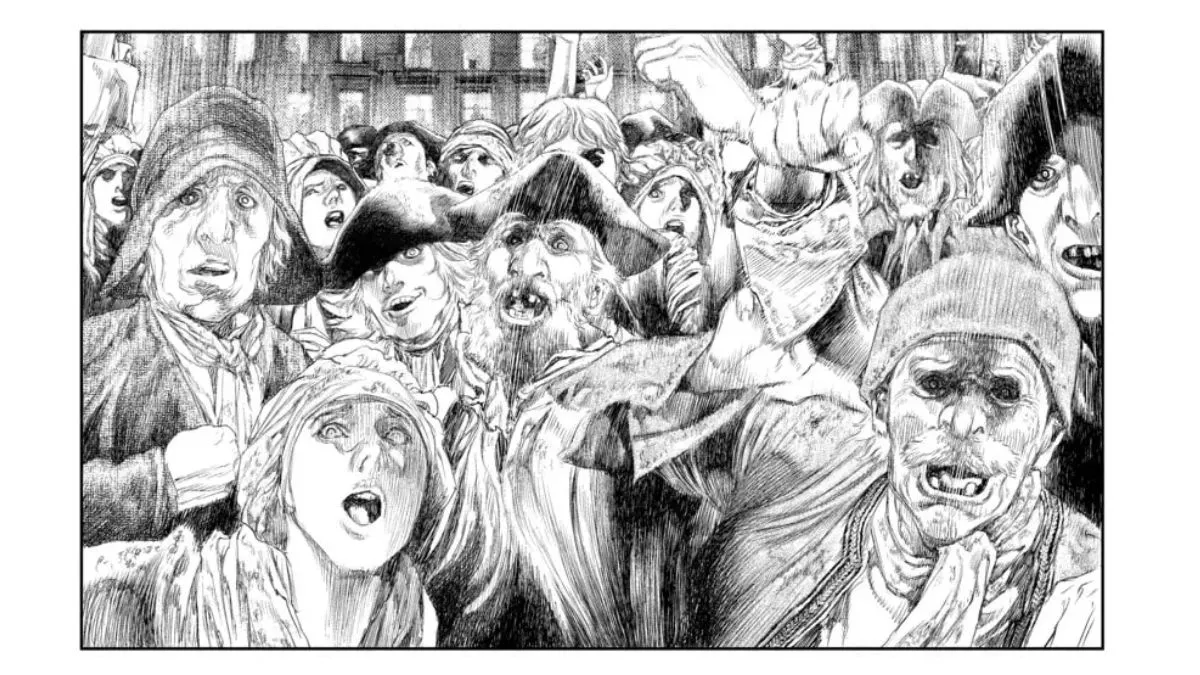
“Innocent” does not simply depict violence as a shower of blood from the stump of a neck; it frames it, dresses it, and presents it before an expectant audience. Execution is no longer a hidden act of necessity, but a performance dressed with precision, theatricality, and unquestioning obedience.
The question of morality is repeated throughout “Innocent”. Henri's dissonance between his duty and personal beliefs always shows him grappling with the existence of his “purity”, and how he could preserve his “innocence” through acts of ordered violence. He sees himself apart from being executioner simply because his work is ordered and not enjoyed, and at some point even fools himself to believe that his devotion to servicing the crown allows his violence to change the world.
Henri is ironic to a point. In one chapter, he exclaims “I see humans, but no humanity,” effectively positioning himself as above the humdrum of political intrigue, class struggle, and violence–the same violence that allows him, a commoner, to exist above his station. His self-denial leads to many of his emotional and mental breakdowns in future chapters, painting himself as an incredibly flawed, yet compelling main character.
Who is Marie-Joseph in “Innocent"?
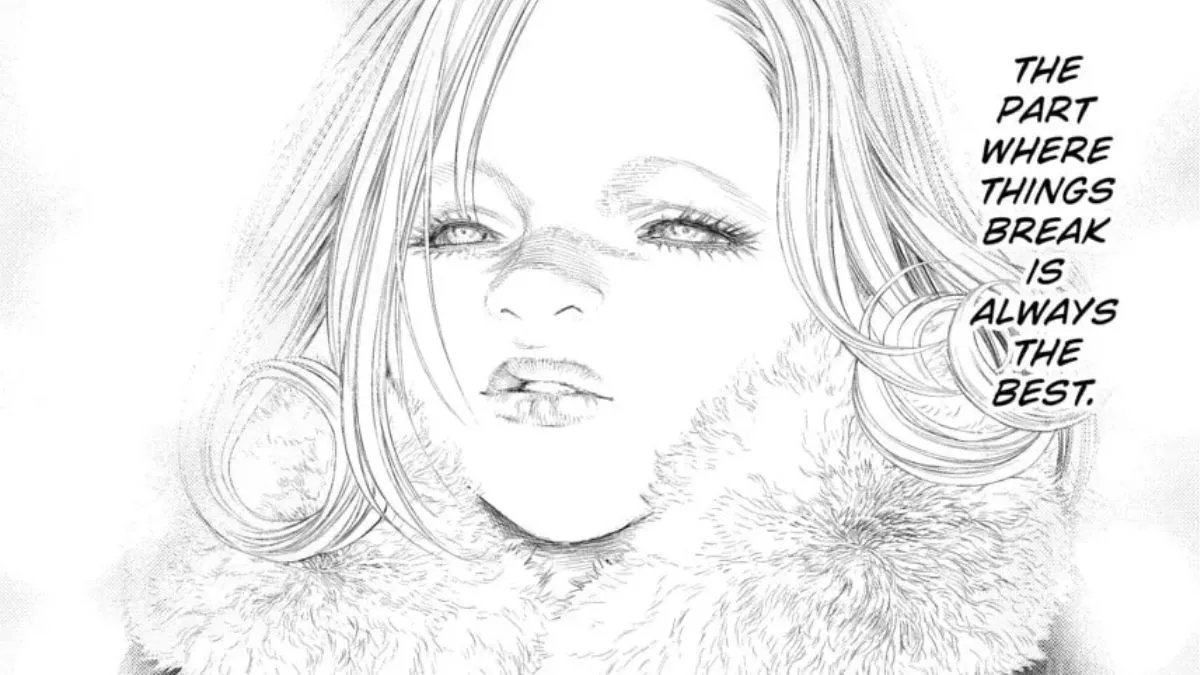
On the other hand, Marie is not bound by conflicted morality or theatrical dramatics trying to justify the existence of her “innocence”. Instead, Marie thrives as a centre of chaos. She is violent, brutish, and does not ascribe to traditional feminine positioning as common in 18th century France. She is decisive, argumentative, and grounded in herself and what she wants.
But this strong personality isn't completely shown out of the blue. Although Marie's characterisation is already prominent as a child in the earlier chapters, she experiences violence from the people around her as the story progresses, leading to who she becomes in following chapters.
Marie is reprimanded for her “manly” desires by their overbearing grandmother, and was even banished to be tortured within the Sanson estate. Her ordeal left her branded with the Sanson emblem above her breast – a stark, painful reminder of how her position in the family, as a woman, is only merchandise to be used and sold for their benefit.
Marie also endures frequent sexual abuse from her father's friend from childhood to her teen years. A chilling factor that steels her heart and develops into a keen disgust and hatred for men.
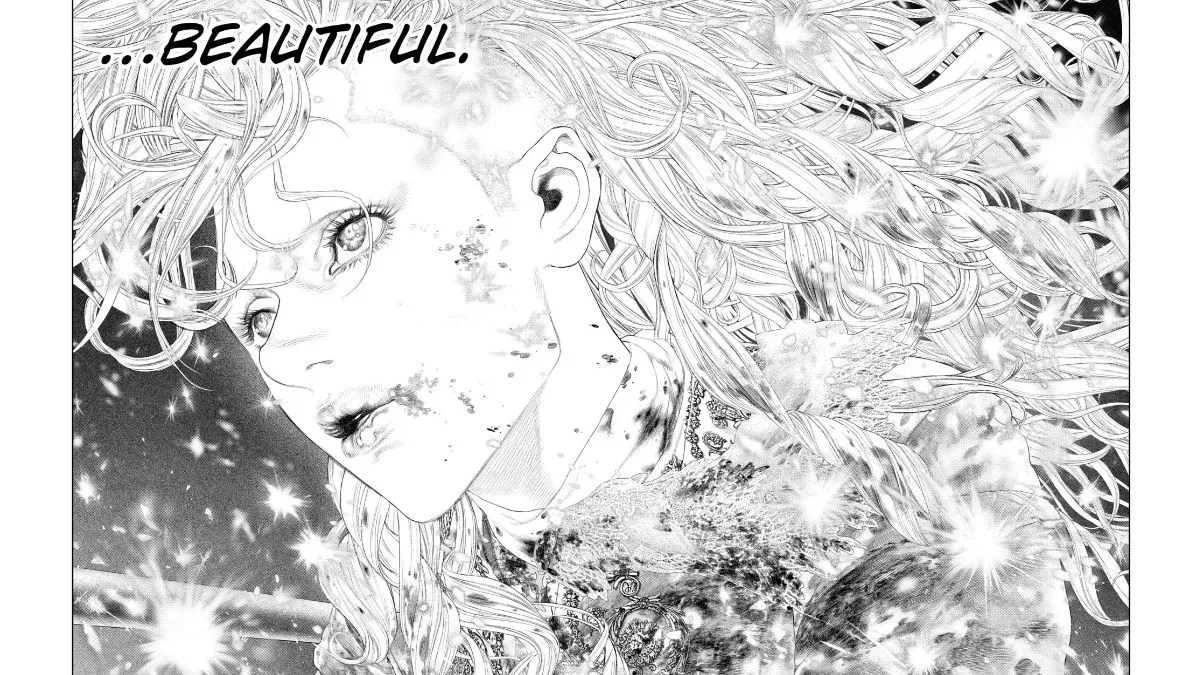
But the thing is, Marie does not take the abuse, from her grandmother or from disgusting men, on the cheek and call it a day. Marie's character embodies a primal, feminine rage that is relatable, evocative, and responsive towards a world that has undoubtedly failed her.
Marie's actions as an adult acts as a catalyst to how the tragedy of the French Revolution plays out. But it's not simplified as a responsive anger. Marie wants to dismantle the chains of gender, society, and class to benefit who she wants to become. She yearns for complete independence and values the ability to make decisions about her life. And if getting that desire means the complete fall of the monarchy and any other governing faction, then what else is she to do?
The juxtaposition between Henri and Marie sees them on two sides of the same coin, with two different reactions to the same violent world. Where Henri asks “how can I remain innocent in this system?”, Marie asks: “why should this system define what innocence is?”
The way Shin'ichi Sakamoto relays their intertwining stories is masterful work. You cannot help but understand where these two characters are coming from, and you cannot help but want to know how they'll find the conclusions to their own questions.
Is the art of “Innocent” good?
There are no exact words to describe the way Shin'ichi Sakamoto draws. It's a thing of ethereal beauty, at most. From Henri's flowing black hair and soulful eyes, to Marie's otherworldly, arresting beauty, to Marie Antoinette's coquettish, stubborn charm, to even Louis XVI's mournful facade. Each character is drawn with care, precision, it makes you feel like they could jump out of the page.
But the star of “Innocent” is not its gorgeous character design, it's how its shocking violence is portrayed in an almost painterly-like romance.
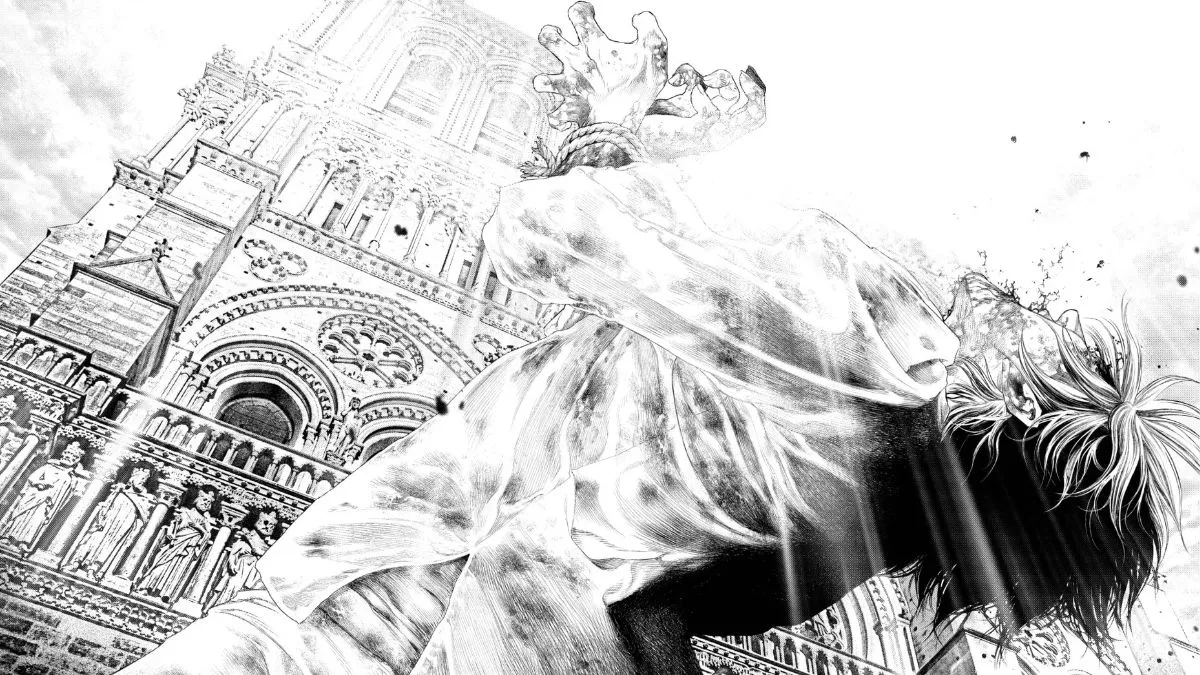
Violence, by nature, is meant to repel. It is grotesque, excessive, and difficult to look at. And yet, in “Innocent”, it becomes something almost impossible to turn away from.
Shin'ichi Sakamoto does not shy away from the brutality of execution. If anything, he lingers on it. Every line is deliberate, every detail rendered with an almost obsessive precision. Flowing fabrics, delicate expressions, and intricately composed panels frame acts of death with a quiet, unsettling elegance. The blade falls, the head is lopped off, and yet the image remains… beautiful.
But this beauty is not comforting. It is disarming.
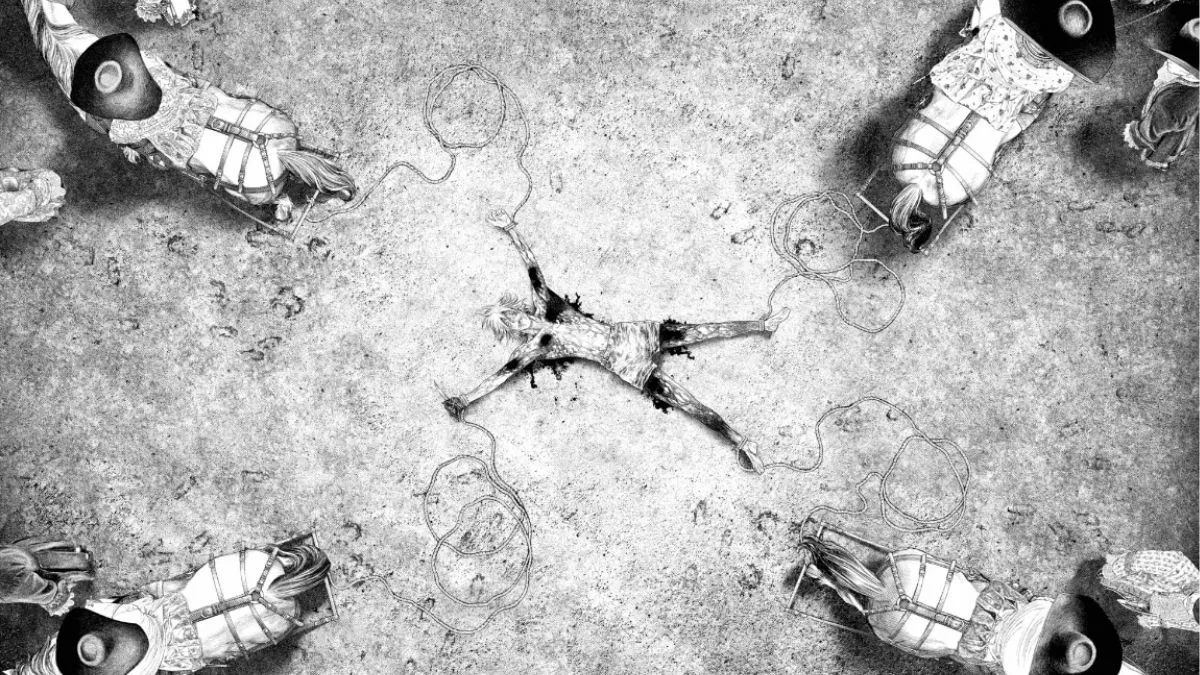
Execution, much like the society that upholds it, is transformed into performance. The page becomes a stage, the figures upon it actors bound to their roles, and the reader, like the crowds of Paris, is made to watch. To observe. To admire. There is no escape from the spectacle, only a growing awareness of one’s place within it.
And that is where “Innocent” becomes most unsettling. Because the question is no longer why violence exists, but why it is so easy to consume when dressed in refinement. If cruelty can be rendered with such grace, if death can be framed with such care, then the line between horror and fascination begins to blur.
In the end, the art does not soften violence. In fact, it sharpens it. It forces you to confront not only what is being shown, but why you cannot look away.
Should I read “Innocent”?
Yes. “Innocent” is a once-in-a-lifetime experience.
It is not an easy read, nor is it meant to be. It does not comfort, and it does not reassure. Instead, it lingers through its unflinching portrayal of violence, its interrogation of morality, and its refusal to offer simple answers to questions that have no clear resolution.
What makes “Innocent” unforgettable is not just its story, nor its characters, but the way it demands something from you as a reader. It asks you to sit with discomfort, to question the systems that define right and wrong, and to confront the uneasy truth that violence, when dressed in beauty, can be just as captivating as it is horrifying.
Through figures like Charles-Henri Sanson and Marie-Joseph, Shin'ichi Sakamoto does not simply tell a story set against the backdrop of the French Revolution, he dissects the very foundations of the world that made it possible.
“Innocent” is not a story you simply read and move on from. It is one you sit with, return to, and wrestle with long after the final page is turned.
Who is Charles-Henri Sanson in history?
Charles-Henri Sanson was a real historical figure. He acted as the chief executioner in Paris during the 18th century, and was recorded to have executed over 3,000 people during his tenure. He is best known as the executioner to King Louis XVI.
Who is the author of “Innocent”?
Shin'ichi Sakamoto wrote and illustrated “Innocent”. It serialised in Shueisha's Weekly Young Jump from January 2013 to April 2015, with a sequel, “Innocent Rouge” following in Grand Jump from May 2015 to January 2020.
Where can I read “Innocent”?
“Innocent” can be purchased as a three-volume omnibus from Dark Horse Comics.