
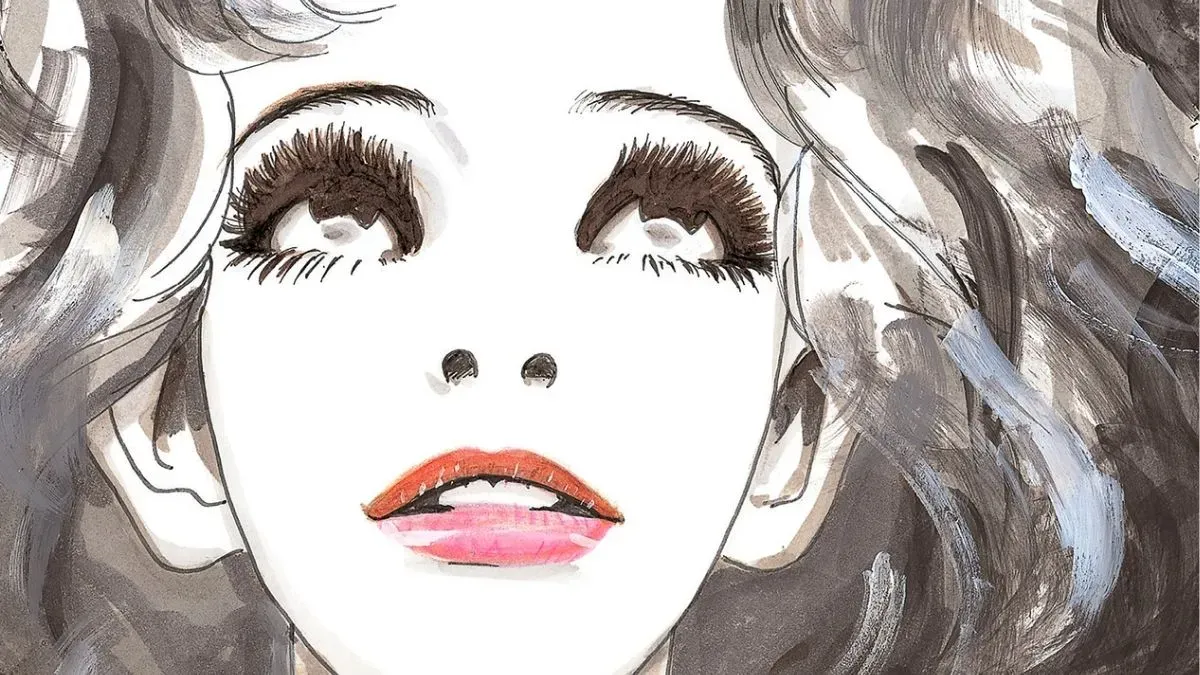
"Helter Skelter" is an unflinching, and often devastating reflection on the unending pursuit of beauty... that comes with a deadly price.
Kyoko Okazaki's "Helter Skelter" is the kind of manga that either leaves your mind entirely or lingers with you for years. Widely regarded as Okazaki's masterpiece, it tears into the beauty and fashion industry with almost surgical precision, exposing the psychological toll of living as an image, rather than a person.
Helter Skelter: Fashion Unfriendly
Author and illustrator: Kyoko Okazaki
Publisher: Shodensha
Warning: Light spoilers ahead
Decades after its release, "Helter Skelter" feels startlingly modern. In an age shaped by influencers, curated online personas, and impossible beauty expectations, its warnings about image-driven fame remain as relevant–and unsettling–as ever. Combining sharp social commentary with psychological horror, it stands as Okazaki's most influential josei manga, and a haunting reminder of what can happen when a person's worth becomes inseparable from their appearance.
What is Helter Skelter about?
Helter Skelter follows Liliko, Japan's biggest supermodel whose beauty is entirely the result of full-body plastic surgery. Sitting comfortably at the top of the fashion world, Liliko enjoys a life of wealth, fame, and adoration, and she has become more than a little accustomed to getting exactly what she wants. She believes, with full certainty, that only she deserves it.
But the fantasy cannot last forever.
When the side effects of her surgeries begin causing her body to deteriorate, Liliko is forced to confront the one thing the beauty industry fears most: aging. As her carefully crafted image starts to crack and a younger model named Kozue begins attracting attention, Liliko grows increasingly paranoid, desperate, and destructive–both to herself, and the people around her.
The fear that comes with beauty
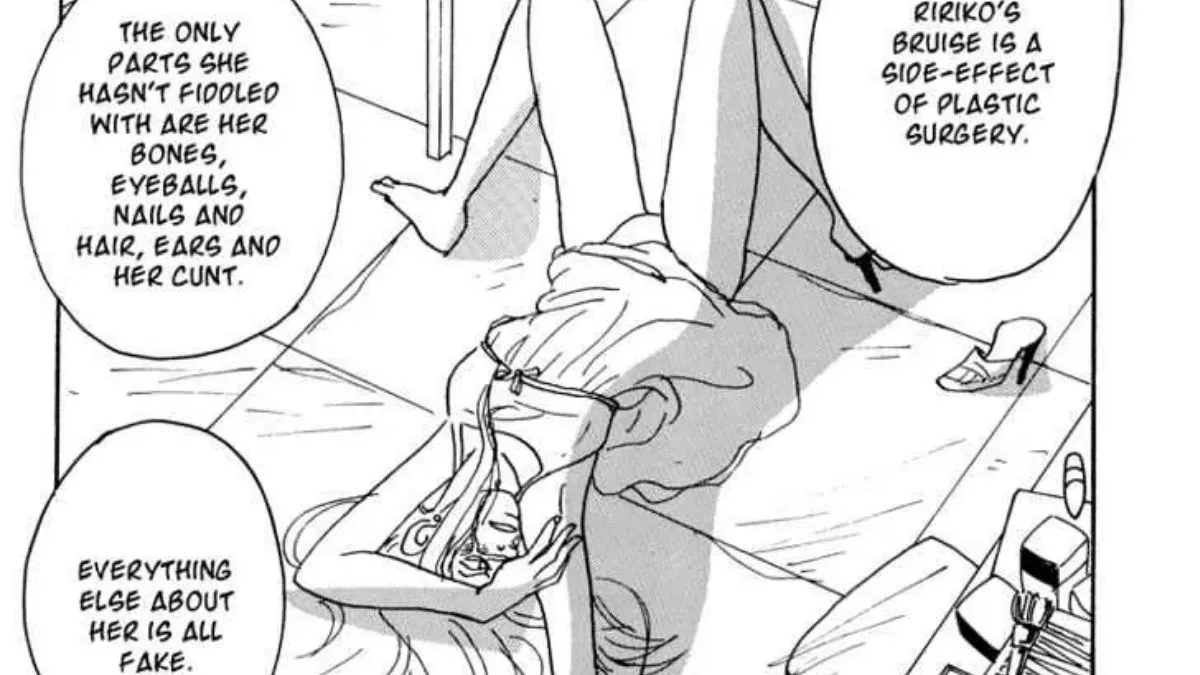
The thing is, Liliko's fear is not entirely unfounded. Although much of her appearance is fake, everything she has ever received came from it.
In the world she inhabits (and, truthfully, in our own), beauty often functions as a form of social currency. Attractive people are routinely afforded opportunities, attention, and forgiveness that others may never receive given that they do not mould with the standard. Entire industries are built upon maintaining that advantage, promising youth, desirability, and perfection to anyone willing to pay the price.
Liliko has spent her entire adult life benefiting from this reality; her “Pretty Privilege”. Her beauty has opened doors, elevated her status in the modeling world, and transformed her into one of the most recognisable women in the country. More importantly, it has become the foundation of her identity and perception of self worth.
That is what makes her downfall so compelling. When Liliko begins losing the very thing that granted her power, she is not merely losing her career: she is losing the version of herself that society taught her to value, and the version she is left with–comprising the broken and ugly parts of her, is something she cannot live with.
The horror of becoming obsolete
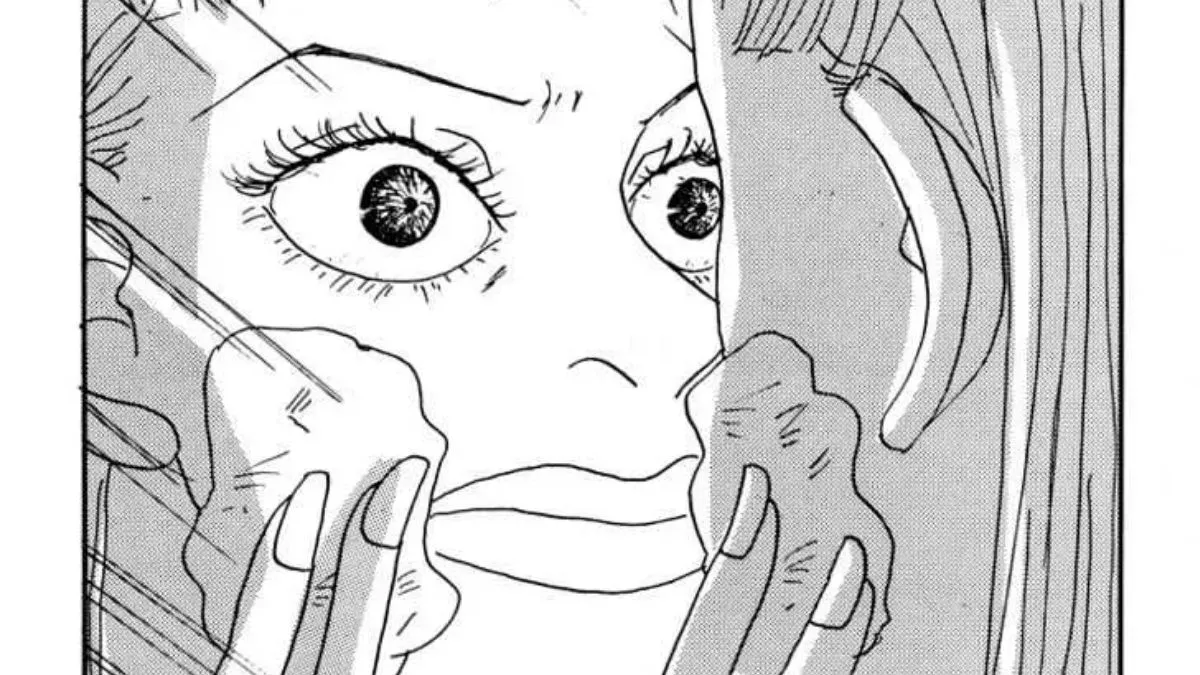
What makes "Helter Skelter" so effective is that its greatest horror is not the body horror, or the disturbing quality of Liliko's twisted psychology: it is obsolescence.
In truth, Liliko's story is not entirely unique. Look at Hollywood and you can see echoes of her everywhere. Actresses are showered with praise and admiration at the height of their careers, yet the moment a wrinkle appears or age begins to show, the conversation shifts. The same public that once celebrated them begins scrutinising every perceived flaw with an appetite that can never truly be satisfied.
The fashion industry depicted in "Helter Skelter" operates in much the same way. It constantly searches for the next trend, the next face, the next sensation. Today's icon inevitably becomes tomorrow's relic. If you don't perform to the standard, you're thrown out and forgotten. Your legacy ceases to exist.
Kozue embodies this fear perfectly. She is not simply a rival. She is a replacement. She is the next big star. And the industry simply cannot have two big stars; there can only be one.
For Liliko, that possibility is unbearable. If beauty is all she has ever been valued for, then what remains once that manufactured beauty fades? The manga offers no easy answer, and it is in that uncertainty that much of its tragedy resides.
A manga ahead of its time
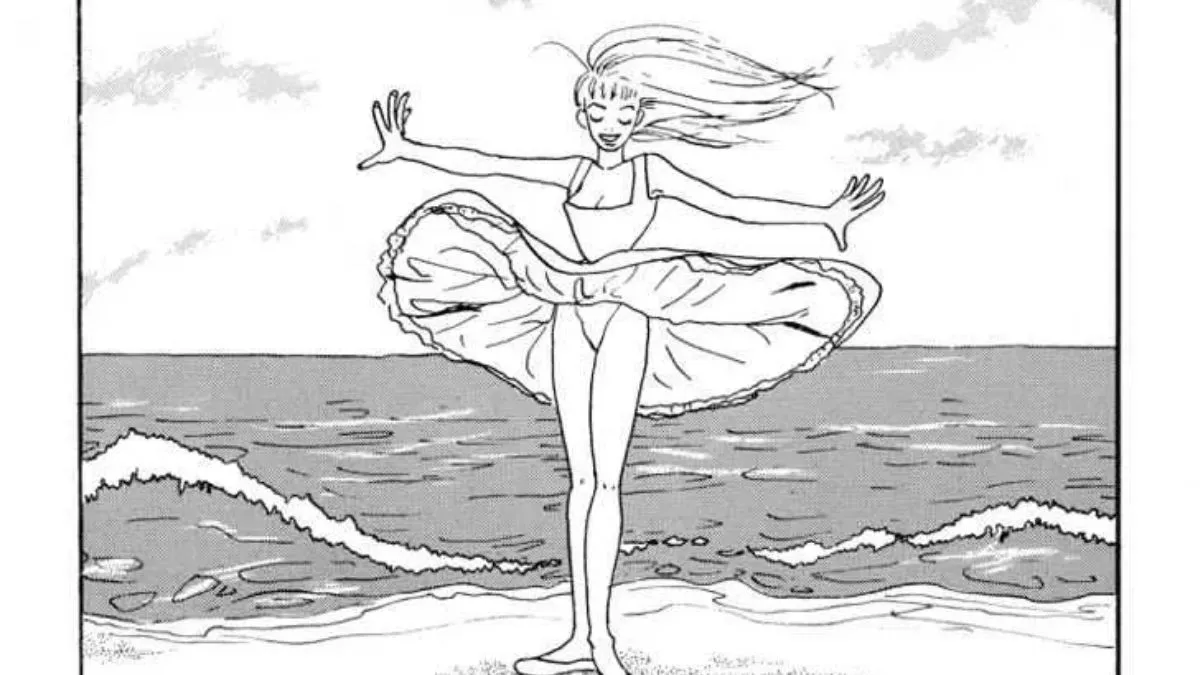
Although first published in the 1990s, "Helter Skelter" feels startlingly modern.
Long before social media influencers, beauty filters, and endless discussions surrounding cosmetic enhancement, Okazaki was already examining the consequences of constructing one's identity around appearance. The manga understands that beauty is not merely something people possess; it is something society consumes. That observation feels especially relevant today.
Modern social platforms encourage users to curate idealised versions of themselves; carefully presenting images designed to attract attention and validation. Do you have a thin waist but with a bust to “die for”? Do you have Euro-centric features with a touch of Asian aesthetic charm? You're already on a one-way ticket to internet stardom.
All the more, it leads to a final question: when the virality dies down, and the internet is pushing up a different aesthetic, where do you end up? Doesn't that mirror Liliko's story quite well?
While most people do not live lives comparable to Liliko's, the pressure to appear desirable, successful, and flawless has arguably become more widespread than ever before. Younger and younger women book plastic surgeons to “fix” facets of their appearance that they are unsatisfied with.
But the thing is, that dissatisfaction cannot be said to be from oneself inherently. Our lives, perceptions, and beliefs, no matter how much we say that it is personal, is always influenced by our environments. Although people may argue that at the end of the day, you get to decide your worth, you can't help but think: but how do I live in a world that erases me just because I don't fit in?
Societal expectation and standards have skewed the vision of beauty into a set mould, that's why ascribing to it has more often than not led to success. However, people fail to consider that maybe that success is settled on crumbling ground. The moment the standard is gone, you're already in free-fall.
In many ways, "Helter Skelter" feels less like a relic of the past, and more like a warning about the future.
Why you should read Helter Skelter
"Helter Skelter" is not a comfortable read. It's never trying to be aesthetically pleasing to the eyes, in order to make your journey into its story easier.
It is messy, cruel, and often deeply unpleasant, and paired with the disjointed linework and heavily stylised art, it feels almost like a fever dream to experience. Yet those qualities are precisely what make it so memorable. Okazaki refuses to romanticise beauty or the celebrity, instead exposing the anxieties and insecurities that lurk beneath.
More importantly, Okazaki's narrative refuses to turn Liliko into either a victim or a villain. Liliko is selfish, manipulative, and often difficult to sympathise with. For much of the story, you can't help but hate her, but also feel sorry for her, but go back to hating her for what she's become.
Although it's easy to forget due to her actions, Liliko is also the product of a culture that taught her beauty was her greatest asset and then punished her the moment that asset began to disappear. Her reaction; that desperation and psychosis, is breathtaking and jarring to look at.
For readers looking for a manga willing to stare directly at the darker side of beauty, few titles do it better. And with only nine chapters, you can definitely enjoy this title in one sitting.
Who is the author of “Helter Skelter"?
Kyoko Okazaki is widely regarded as one of the most influential Josei authors of her era. “Helter Skelter” was serialised in Feel Young magazine from 1995 to 1996, after which Okazaki retired permanently from manga creating due to a vehicular accident. The manga inspired a live action film directed by Mika Ninagawa in 2012, and was translated into English by Vertical Publishing in 2013.
Where can I read “Helter Skelter"?
“Helter Skelter” can be purchased through Amazon as a paperback one-volume omnibus, or through the Kindle store.